
FREEBIE SCHEMES DISRUPT BUDGET
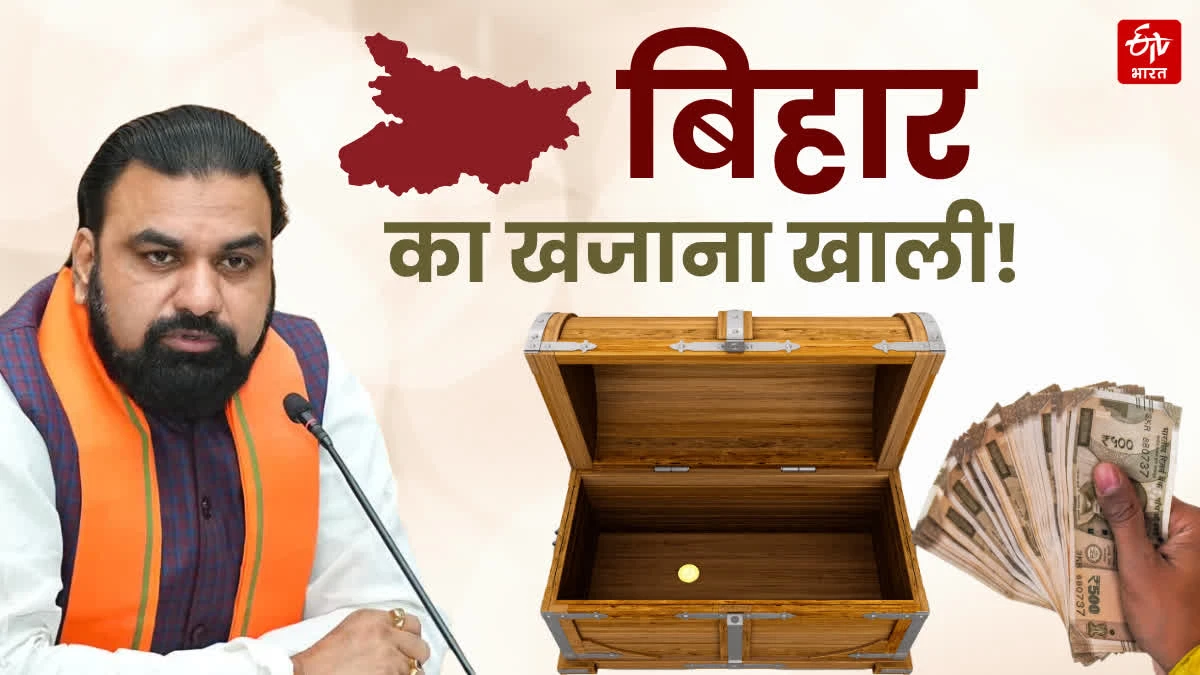
The Samrat Chaudhary-led government in Bihar faces a dual challenge: securing funds for the 2026-27 fiscal year budget and managing expenditures. Growing reliance on central tax shares, combined with the financial burden of various freebie schemes, has led to delays in the disbursement of salaries and pensions for government employees.

FREEBIE SCHEMES DISRUPT BUDGET


17-NOV-ENG 2
RAJIV NAYAN AGRAWAL
PATNA----------------------------The Samrat Chaudhary-led government in Bihar faces a dual challenge: securing funds for the 2026-27 fiscal year budget and managing expenditures. Growing reliance on central tax shares, combined with the financial burden of various freebie schemes, has led to delays in the disbursement of salaries and pensions for government employees.
The Samrat Chaudhary government has proposed a budget of ₹3,47,589 crore for the 2026-27 fiscal year. This includes ₹1,58,178 crore as Bihar’s share of central taxes—an increase of ₹13,316 crore over the previous fiscal year’s figure of ₹1,38,215 crore.
Additionally, the central government is set to provide ₹51,895 crore in grants, while the Bihar government expects to generate approximately ₹70,000 crore in its own tax and non-tax revenue. Despite this, the government still faces a significant funding gap, and several major projects remain stalled due to a shortage of funds in the state exchequer.
In the 2026-27 fiscal year, Bihar received ₹10,845 crore as its share of central taxes in early November. Similar amounts of ₹10,845 crore were also received from the central government in both October and August.
Furthermore, the central government released ₹1,663 crore for rural employment schemes. Centrally sponsored schemes have also compounded Bihar’s difficulties, resulting in delays in payments to contractors.
Under established criteria, 41 percent of the taxes collected by the central government are distributed among all states, including Bihar. This allocation is disbursed to the states in 14 installments, with a provision for the funds to be transferred on the 10th of every month. Such funds have been disbursed on the occasion of festivals in the past as well; for instance, in November—ahead of Chhath and Diwali—the central government provided funds to Bihar and other states.
For the 2026-27 financial year, Bihar is set to receive ₹158,178.32 crore as its share of central taxes, along with ₹51,895.8 crore in grants—totalling ₹210,074 crore from the central government. With the Bihar government projected to generate ₹70,000 crore in revenue from its own resources, the total funds available by March 2027 are estimated to be around ₹2.8 lakh crore.
Even so, securing the remaining ₹60,000 crore required for the budget remains a significant challenge. The state has yet to receive compensation from the Centre for flood-related damages amounting to approximately ₹10,000 crore. Furthermore, the implementation of populist schemes—such as the provision of ₹10,000 to women and free electricity—has placed an additional burden on the state exchequer, particularly in the lead-up to the 2025 elections.
According to economist Naval Kishore Chaudhary, the central government transfers the state’s share of taxes on the 10th of every month—a substantial portion of which the Bihar government allocates toward salaries and pensions. In recognition of this, the state government has designated the 10th of each month as 'Pension Day'. Since salaries are also paid using these central tax transfers, any delay in the receipt of these funds leads to delays in salary disbursements.
"Previously, funds would reach the accounts of government employees by the 30th—the last day of the month. The state’s own revenue is insufficient to cover salaries, pensions, and debt repayments on time. While the overall budget size has grown, both the mobilization of funds and their expenditure have become increasingly challenging." — Naval Kishore Chaudhary, Economist
Expert Professor Pramod Kumar suggests that administrative errors could also be a major factor contributing to the failure to pay salaries and pensions on time. Under several centrally sponsored schemes, funds are used to pay employee salaries and cover other expenses; consequently, any delay in the receipt of funds from the central government has an immediate, direct impact.
Despite a high-level meeting chaired by the Chief Secretary, difficulties persist within the Education, Health, Home, and Rural Development departments. Large companies often secure contracts for development projects from the Bihar government but fail to make timely payments to their sub-contractors.
"Former Chief Minister Nitish Kumar maintained strict oversight regarding salaries and pensions, which is why such issues were less visible during his tenure—though complaints about delays in receiving funds for central schemes existed even then. If the government manages its budget more effectively, this problem could be resolved," says Professor Pramod Kumar, an economic expert.
According to the budget for the 2026-27 financial year, the Bihar government is set to spend ₹105,390 crore solely on salaries and pensions—comprising ₹70,220 crore for salaries and ₹35,170 crore for pensions.
Additionally, the government must allocate ₹2,265 crore toward the repayment of the principal amount on its debts. Furthermore, Bihar is required to contribute its share—exceeding ₹30,000 crore—toward centrally sponsored schemes.
With only four months remaining in the 2026-27 financial year, several departments have been sluggish in utilizing their allocated funds. This will likely increase the pressure on the Bihar government to expedite spending in the final months, especially since the central government typically releases a larger portion of outstanding funds during the last quarter.
Experts express skepticism regarding the government's ability to fully utilize the budgeted funds. Meanwhile, the government also faces mounting debt pressure, driven by the need to borrow from financial institutions to initiate major projects.
What's Your Reaction?
 Like
0
 Dislike
0
 Love
0
 Funny
0
 Wow
0
 Sad
0
 Angry
0









Comments (0)