
170 STABS, 20 MINUTES OF TERROR
-A home is supposed to be a sanctuary—a place where a woman finds love, dignity, security and emotional support. Marriage, ideally, represents a partnership built on mutual respect, trust and understanding. Yet, for countless women, the very place that should protect them becomes a setting of fear, humiliation, cruelty and violence. A horrifying incident reported by Dainik Bhaskar, in which a husband allegedly stabbed his wife around 170 times with a pair of scissors over nearly 20 minutes, has once again exposed the disturbing reality of domestic violence and the extreme brutality that can exist within intimate relationships.

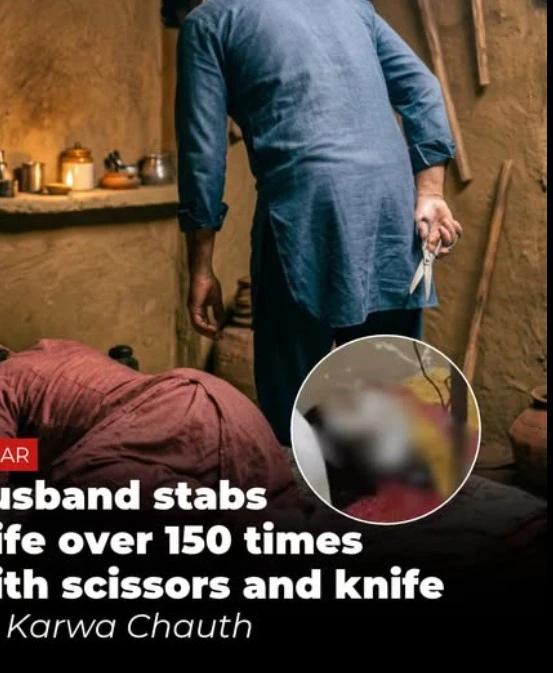
170 STABS, 20 MINUTES OF TERROR
2-NOV-ENG 1


RAJIV NAYAN AGRAWAL
ARA----------------------------A home is supposed to be a sanctuary—a place where a woman finds love, dignity, security and emotional support. Marriage, ideally, represents a partnership built on mutual respect, trust and understanding. Yet, for countless women, the very place that should protect them becomes a setting of fear, humiliation, cruelty and violence. A horrifying incident reported by Dainik Bhaskar, in which a husband allegedly stabbed his wife around 170 times with a pair of scissors over nearly 20 minutes, has once again exposed the disturbing reality of domestic violence and the extreme brutality that can exist within intimate relationships.
According to the report, the husband allegedly sat on his wife's chest and repeatedly attacked her with scissors. The assault reportedly continued for approximately 20 minutes. The woman sustained multiple injuries and, after regaining consciousness, recounted the terrifying experience. Her account offers a chilling glimpse into the suffering that victims of domestic violence may endure behind the closed doors of their homes.
The reported figure of 170 stabs is not merely a shocking number. It represents an episode of sustained violence in which a person who should have been a woman's closest companion allegedly turned into her attacker. The incident is a painful reminder that domestic violence is not always limited to occasional arguments, verbal abuse or isolated physical assaults. In its most extreme form, it can become an act of life-threatening cruelty.
Domestic violence is often misunderstood as a private disagreement between husband and wife. Such an understanding is not only misleading but also dangerous. Violence within a family is not a personal matter that society can afford to ignore. It is a violation of an individual's fundamental rights, dignity and freedom.
The reported incident illustrates how devastating such violence can become. According to the available account, the woman was physically overpowered and repeatedly attacked. The alleged use of scissors and the duration of the assault make the episode particularly disturbing. The fact that the survivor was subsequently able to describe what happened highlights the importance of listening to victims and ensuring that their experiences are taken seriously.
For many women, the suffering does not begin with a single violent episode. Domestic abuse may develop gradually through controlling behaviour, intimidation, humiliation, threats, restrictions on movement and financial dependence. In some households, repeated verbal aggression becomes normalised. In others, physical violence follows disagreements over money, family responsibilities, personal choices or relationships with relatives.
However, no disagreement, misunderstanding or marital conflict can justify physical assault. Differences between partners are inevitable, but violence is never an acceptable response. Marriage does not give either spouse ownership over the other person's body, choices or life.
One of the most troubling questions raised by such incidents is why domestic violence continues despite growing awareness, education and legal protection.
The reasons are complex. Deep-rooted patriarchal attitudes, unequal power relationships, economic dependence, social pressure and the fear of losing family support often prevent women from resisting abusive relationships or seeking assistance.
In many communities, women are still expected to preserve their marriages at almost any cost. They may be advised to tolerate their husbands' behaviour, remain silent for the sake of their children or avoid bringing family disputes into public discussion. Sometimes, even when a woman approaches relatives for help, she is encouraged to compromise rather than seek protection.
Such attitudes create an environment in which perpetrators may feel that their actions will have little consequence. When violence is repeatedly excused as a domestic disagreement, the victim is left increasingly isolated.
Economic dependence is another major obstacle. A woman without an independent source of income may find it difficult to leave an abusive household. She may worry about the future of her children, access to accommodation, social acceptance and the possibility of supporting herself.
There are also victims who remain silent because they fear retaliation. They may believe that reporting abuse will make their situation even more dangerous. Others hesitate because they do not want their children to grow up in a broken family.
But an important truth must be recognised: a household sustained through fear and violence cannot be considered a healthy family. Protecting the institution of marriage should never mean sacrificing the safety and dignity of a woman.
Physical injuries are only one dimension of domestic violence. The psychological consequences can be equally devastating and may continue long after visible wounds have healed.
A woman who experiences repeated abuse may develop persistent fear, anxiety, emotional distress and a loss of confidence. She may begin questioning her own decisions and gradually withdraw from social relationships. The constant possibility of another violent episode can make ordinary activities stressful.
Survivors of severe physical attacks may also struggle with memories of the incident. The sound of an argument, an aggressive gesture or an unexpected movement may remind them of the trauma. Recovery, therefore, requires more than medical treatment. It may involve counselling, emotional support, rehabilitation and a secure environment.
In the reported case, the woman's account of the alleged attack deserves to be heard with sensitivity and seriousness. Society must not reduce her experience to a sensational headline or a shocking statistic. Behind every such report is a human being whose physical security, emotional well-being and future have been deeply affected.
Survivors should be treated with compassion rather than suspicion or judgment. Their privacy must be respected, and they should never be blamed for the violence inflicted upon them.
Domestic violence does not affect only the person who is physically assaulted. Its consequences frequently extend to children and other members of the household.
Children who witness violence between their parents may experience insecurity, fear and emotional confusion. Even when they are not directly assaulted, growing up in an atmosphere of intimidation can affect their psychological development.
A child who repeatedly witnesses one parent abusing another may begin to consider aggression an acceptable way of resolving disagreements. This can create a dangerous cycle in which violence is transmitted from one generation to the next.
On the other hand, children who see a parent suffering silently may develop feelings of helplessness and anxiety. Their academic performance, social relationships and emotional development may also be affected.
Therefore, preventing domestic violence is not simply about protecting individual women. It is also about safeguarding the emotional and social foundations of future generations.
A peaceful household is built not through authority or fear but through mutual respect, communication and equality.
India has a legal framework designed to protect women against domestic violence and serious physical assaults.
The Protection of Women from Domestic Violence Act, 2005, provides civil remedies to women facing domestic abuse. It recognises different forms of violence, including physical, sexual, verbal, emotional and economic abuse. Depending on the circumstances, courts can issue protection orders, residence orders, monetary relief and other forms of assistance.
In addition, serious physical attacks may attract criminal prosecution under the applicable provisions of the Bharatiya Nyaya Sanhita, 2023. Depending on the nature of the injuries, the intention of the accused and the evidence collected, the relevant criminal provisions may include those dealing with voluntarily causing hurt, grievous hurt, dangerous weapons and attempted murder.
The precise charges in any particular case must be determined by the investigating authorities and the courts on the basis of evidence.
However, the existence of laws alone cannot eliminate domestic violence. Their effective implementation is equally important. Police officers must respond sensitively to complaints, medical facilities must provide timely treatment, and victims must receive information about their legal rights.
Protection mechanisms should also ensure that women are not forced to return to unsafe environments merely because of family or social pressure.
The responsibility for preventing domestic violence cannot rest solely with government institutions. Families, educational institutions, community organisations and society at large must play an active role.
Parents should teach children from an early age that respect is not determined by gender. Boys must understand that masculinity does not mean controlling or intimidating women. Girls must be encouraged to recognise their rights, develop confidence and seek assistance whenever they face abuse.
Families should also avoid treating violence as a matter of family honour. When a woman reports abuse, her concerns must be investigated rather than dismissed. Relatives should provide practical support and help her access medical, legal and psychological assistance.
Neighbours and community members also have an important responsibility. Although they may hesitate to intervene in what they perceive as a private family matter, credible indications of serious violence should never be ignored. Where immediate danger exists, contacting the police or emergency services may help prevent further harm.
Media organisations, meanwhile, must report such incidents responsibly. Sensational headlines may attract attention, but journalism should go beyond shock value. It should explain the wider social problem, highlight available support systems and encourage meaningful public discussion.
Women facing domestic violence need accessible and reliable support. In many cases, the most difficult step is not recognising the abuse but finding a safe way to escape it.
Several measures can make a significant difference.
First, emergency response systems must remain accessible and responsive. Women in immediate danger should be able to contact the police without fear or unnecessary procedural obstacles. India's emergency response number is 112.
Second, hospitals and healthcare centres should have appropriate procedures for treating survivors of physical violence. Medical professionals must recognise signs of abuse, document injuries where appropriate and inform victims about available support.
Third, One Stop Centres, established under the government's support framework for women affected by violence, can provide assistance through medical, legal, psychological and other support services.
Fourth, legal aid should be made accessible to women who cannot afford private legal representation. Awareness of protection orders, residence rights and other remedies can help survivors make informed decisions.
Finally, economic empowerment must become an important part of the response. Education, employment opportunities, vocational training and financial independence can help women reduce their vulnerability and make decisions about their futures with greater confidence.
Every horrifying incident of domestic violence generates public anger for a few days. Newspapers publish reports, television channels conduct discussions and social media platforms fill with expressions of outrage. However, public attention often disappears before the underlying problems receive sustained attention.
Schools and colleges should promote gender equality and healthy relationships. Local administrations should strengthen awareness programmes. Police stations should ensure that complaints of domestic abuse are treated seriously. Community organisations should work to identify vulnerable women and connect them with support services.
It is equally important to challenge the social belief that a husband has an unquestionable right to exercise authority over his wife. A marriage is a partnership, not a relationship of ownership. Both individuals have equal rights to dignity, personal freedom and physical security.
No woman should have to prove her loyalty by enduring violence. No family should ask a daughter or sister to remain silent simply to protect social reputation. And no society can claim to respect women while tolerating brutality against them within the household.
The reported attack involving approximately 170 stabs with scissors is a deeply disturbing reminder of the dangers faced by women in abusive relationships. While the complete circumstances of the incident and the legal findings must be established through proper investigation, the survivor's account has brought an urgent social issue into public focus.
The measure of a civilised society is not merely its economic growth, technological progress or educational achievements. It is also reflected in how safely and respectfully it treats its most vulnerable members.
A woman should not have to live in fear of the person with whom she shares her home. She should be able to express disagreement without facing intimidation, make personal decisions without threats and seek help without being judged.
The fight against domestic violence requires more than legislation. It demands a change in attitudes, stronger institutions, responsible families and a society that refuses to remain silent in the face of abuse.
Ultimately, the message is simple but powerful: A home must be a place of love, not terror; marriage must be a partnership, not a prison; and a woman's right to live with dignity and safety must never be negotiable.
What's Your Reaction?
 Like
0
 Dislike
0
 Love
0
 Funny
0
 Wow
0
 Sad
0
 Angry
0












Comments (0)