
QUESTIONS ON EC’S IMPARTIALITY
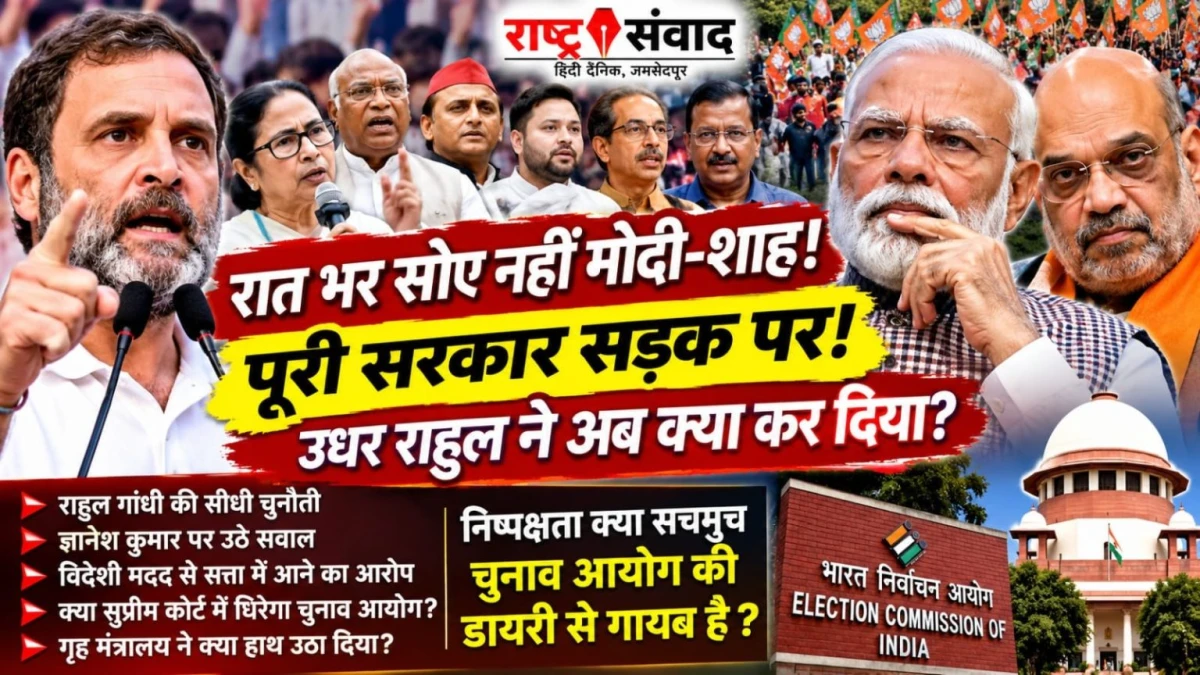
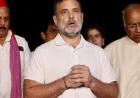
The rapid rise in political temperature within Indian democracy has given rise to several serious questions. Concerns regarding the impartiality of the Election Commission (EC) have emerged, following the manner in which Rahul Gandhi has challenged the EC, Chief Election Commissioner Gyanesh Kumar, Prime Minister Narendra Modi, and Home Minister Amit Shah—a challenge that cannot be dismissed as a mere political statement. By questioning the integrity of the electoral process and the mechanisms through which power is attained, he has steered the political discourse in a new direction.

QUESTIONS ON EC’S IMPARTIALITY
3-NOV-ENG 11


RAJIV NAYAN AGRAWAL
ARA----------------------------The rapid rise in political temperature within Indian democracy has given rise to several serious questions. Concerns regarding the impartiality of the Election Commission (EC) have emerged, following the manner in which Rahul Gandhi has challenged the EC, Chief Election Commissioner Gyanesh Kumar, Prime Minister Narendra Modi, and Home Minister Amit Shah—a challenge that cannot be dismissed as a mere political statement. By questioning the integrity of the electoral process and the mechanisms through which power is attained, he has steered the political discourse in a new direction.
Rahul Gandhi’s core question is: if the electoral process becomes a subject of debate before the Supreme Court, will the role of Chief Election Commissioner Gyanesh Kumar also come under scrutiny? Furthermore, by alleging foreign assistance in the Prime Minister’s ascent to power, he has sought to put the ruling party in the dock. These are grave political allegations that necessitate an impartial investigation based on concrete evidence.
Meanwhile, questions are also being directed at the ruling Bharatiya Janata Party (BJP). What prompted Union Ministers and senior national-level BJP leaders to take to the streets to lead the defense? Is this a calculated strategy to counter the opposition’s sharp accusations, or has the government finally grasped the gravity of these political questions? Is there such an urgent need for political mobilization that even the Ministry of Home Affairs is being drawn into the fray?
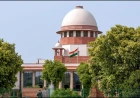
However, in a democracy, neither the allegations leveled by Rahul Gandhi constitute the absolute truth, nor does the BJP’s rebuttal provide a definitive answer to every question. The impartiality of a constitutional body like the Election Commission must remain beyond any shadow of a doubt. The country’s Supreme Court should be allowed to function independently, ensuring that the truth is brought to light.
In a democracy, the legitimacy of power is not proven by gathering crowds on the streets, but by providing transparent answers to every question raised by the public. The primary responsibility of the opposition is to pose tough questions to the government, while the main duty of the ruling party is to provide satisfactory answers to them. After all, the nation’s democracy is not the private fiefdom of any single political party; rather, it is a trust held on behalf of the country’s millions of citizens.
In the days to come, it will be highly intriguing to see what new and decisive turn this democratic struggle between the ruling party and the opposition takes.
What's Your Reaction?
 Like
0
 Dislike
0
 Love
0
 Funny
0
 Wow
0
 Sad
0
 Angry
0








Comments (0)