
SARDAR PATEL IS THE ARCHITECT OF NES INDIA: LALIT GARG
The building of a nation is not achieved merely by attaining independence; rather, it lies in transforming that independence into unity, integrity, security, and the power of collective resolve. This was the greatest challenge India faced following its independence. The country grappled with the fragmentation of princely states, the trauma of partition, communal tension, insecurity along its borders, and a host of political and administrative crises confronting its nascent democracy. In such trying times, if any single individual shouldered the historic responsibility of uniting India—not just geographically, but also politically and nationally—it was Sardar Vallabhbhai Patel. National Unity Day, observed on his 151st birth anniversary, is not merely a commemoration of a great man; it is an occasion to reaffirm our commitment to India’s collective strength, national self-respect, and visionary leadership. Sardar Patel’s personality was like a rock, against which the waves of even the m

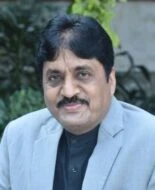
SARDAR PATEL IS THE ARCHITECT OF NES INDIA: LALIT GARG
31-OCT-ENG 16


RAJIV NAYAN AGRAWAL
ARA----------------------------The building of a nation is not achieved merely by attaining independence; rather, it lies in transforming that independence into unity, integrity, security, and the power of collective resolve. This was the greatest challenge India faced following its independence. The country grappled with the fragmentation of princely states, the trauma of partition, communal tension, insecurity along its borders, and a host of political and administrative crises confronting its nascent democracy. In such trying times, if any single individual shouldered the historic responsibility of uniting India—not just geographically, but also politically and nationally—it was Sardar Vallabhbhai Patel. National Unity Day, observed on his 151st birth anniversary, is not merely a commemoration of a great man; it is an occasion to reaffirm our commitment to India’s collective strength, national self-respect, and visionary leadership. Sardar Patel’s personality was like a rock, against which the waves of even the most daunting circumstances would break and recede. His steadfastness, organizational acumen, and capacity for mass leadership during the freedom struggle earned him a distinguished place in national politics. The Kheda Satyagraha and the Bardoli movement established him as a hero of the farmers' struggle. The title ‘Sardar’—bestowed upon him by the women of Bardoli—eventually became the defining hallmark of his national identity. However, his truly historic role emerged after independence, when the most pressing necessity was to consolidate India into a unified nation.
At that time, there were over 562 princely states in the country. Many of their rulers aspired to maintain an independent existence or remain separate from India—a situation that threatened to leave India’s political map fragmented. Sardar Patel addressed this challenge through his political resolve, extraordinary diplomacy, and pragmatic wisdom. He employed dialogue where necessary, exercised firmness when required, and—where national interest was paramount—refused to bow to any form of pressure. The integration of Hyderabad into India is a notable example of this. It was not merely the merger of princely states, but a historic undertaking that laid the foundation for a modern nation. Patel’s greatest attribute was that he viewed politics not as a means to attain power, but as a responsibility toward nation-building. For him, national interest stood above any political party, ideology, region, or community. He understood that the defense of independence could not be sustained by emotional slogans alone; it required a robust administration, disciplined governance, a clear foreign policy, and a solid framework for internal security. His concerns regarding Pakistan’s policies, the issue of Kashmir, and the challenges in border regions were a testament to this vision of national security. The warning he issued to the then-Prime Minister Jawaharlal Nehru in a letter dated November 7, 1950—concerning China’s policy toward Tibet—serves as a significant document reflecting his strategic foresight. He believed that in relations with neighboring countries, goodwill must be balanced with vigilance and the protection of national interests.
Another crucial aspect of Sardar Patel’s vision was the creation of India’s administrative system. Following independence, many advocated for the abolition of the administrative services established by the British, but Patel recognized their vital importance. He provided a strong foundation for all-India services, such as the Indian Administrative Service (IAS) and the Indian Police Service (IPS). He believed that for the sake of national unity and administrative stability, it was essential to have institutions that would continue to fulfill their responsibilities toward the nation, regardless of political changes. He instilled in the officers the conviction that their allegiance no longer lay with a foreign regime, but with independent India and its citizens. It is for this reason that he is often referred to as the patron of the Indian administrative services. His political vision was characterized by firmness, yet it was devoid of dogmatism. He understood that a nation is strengthened not only by laws and administration but also by social trust and civic responsibility. He did not view national unity as the negation of diversity, but rather as the cultivation of a shared national consciousness amidst that diversity. While India’s languages, cultures, traditions, and beliefs may vary, a shared allegiance to the nation and respect for the Constitution bind everyone together. Today, as tendencies toward ideological differences, regional demands, caste-based divisions, and political bitterness emerge within society, this message from Patel becomes even more relevant.
As India moves forward with the resolve to become a developed, self-reliant, and prosperous nation—and a global power—by the year 2047, the ideas, vision, and spirit of nation-building championed by Sardar Vallabhbhai Patel have become more pertinent than ever. The strength of the 'United India' (Akhand Bharat) he envisioned was rooted not merely in geographical unity, but in national integration, social harmony, administrative resolve, and collective responsibility. In addressing the challenges and opportunities India faces today—ranging from economic progress, technological self-reliance, and social equality to internal security, good governance, and global leadership—Patel’s devotion to the nation, his unwavering willpower, and his pragmatic leadership vision can serve as a guiding light. The dream of a 'Developed India' (Viksit Bharat) will be realized only when the nation’s diversity becomes its strength, national interest remains paramount, and every citizen plays an active role in nation-building. In this light, Sardar Patel is not merely a great figure from history, but He is a source of inspiration who shaped the direction and state of India in 1947.
The personality of Sardar Vallabhbhai Patel was a remarkable blend of indomitable courage, iron-willed determination, discipline, forthrightness, organizational acumen, administrative efficiency, and unwavering patriotism. Beyond his firm resolve, he was a highly pragmatic and visionary statesman, possessing an extraordinary capacity for decision-making. He was not merely a freedom fighter or the nation’s first Deputy Prime Minister and Home Minister; he was an architect of the nation who laid a permanent foundation for India’s unity and integrity. His life teaches us that great nations are built not merely through resolutions, but through strength of character, discipline, dedication to duty, sacrifice, and collective commitment. These are the eternal virtues that India—both today and for future generations—needs most. Currently, India is advancing toward becoming an economic superpower, assuming a role in global leadership, and evolving into a developed nation. Yet, the fundamental prerequisite for this journey of development is internal unity and national security. Economic prosperity can only be enduring if a nation is socially cohesive, politically stable, and strategically robust. Sardar Patel’s life illustrates that a nation’s strength lies less in its material resources and more in its resolve, leadership, and a unified national consciousness.
Sardar Patel passed away on December 15, 1950, yet his nationalist vision remains the bedrock of India’s national consciousness to this day. The 182-meter-tall ‘Statue of Unity,’ erected in Gujarat in 2018, stands as a symbol of his monumental personality and his contributions to the nation. However, his true legacy will endure not in the height of any statue, but in our collective efforts to keep India’s unity intact. Sardar Patel was more than just the architect who integrated the princely states; he was a visionary leader—a man of the era—who transformed a fragmented national consciousness into a singular, unified resolve. On his birth anniversary, we must resolve to ensure that India’s unity is not merely an achievement of the past, but a responsibility of the present and the greatest asset for the future. This would be a true tribute to the 'Iron Man' and the very essence of National Unity Day.
What's Your Reaction?
 Like
0
 Dislike
0
 Love
0
 Funny
0
 Wow
0
 Sad
0
 Angry
0








Comments (0)