
FREEDOM FROM POVERTY: LALIT GARG
-The true progress of a nation cannot be assessed solely by its economic growth rate, Gross Domestic Product (GDP), industrial expansion, or global economic ranking. Development attains its true significance only when its benefits reach the last person in society—when the scope of poverty shrinks, when security, dignity, and prosperity permeate the lives of ordinary citizens, when the stigma of poverty is erased, and when equal access to economic opportunities is established for all. In this context, the notable decline in poverty levels in India stands as a historic achievement and a promising sign for the making of a 'New India.' The fact that the World Bank’s latest report identifies this progress as one of the fastest reductions in poverty globally further underscores the significance of this achievement. This is not merely a shift in economic statistics; it is a story of positive transformation in the lives of millions. It is a major outcome of the efforts directed toward poverty


FREEDOM FROM POVERTY: LALIT GARG
2-NOV-ENG 10


RAJIV NAYAN AGRAWAL
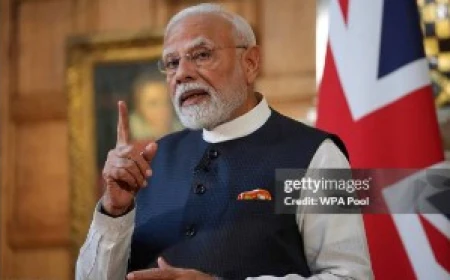
ARA-------------------------The true progress of a nation cannot be assessed solely by its economic growth rate, Gross Domestic Product (GDP), industrial expansion, or global economic ranking. Development attains its true significance only when its benefits reach the last person in society—when the scope of poverty shrinks, when security, dignity, and prosperity permeate the lives of ordinary citizens, when the stigma of poverty is erased, and when equal access to economic opportunities is established for all. In this context, the notable decline in poverty levels in India stands as a historic achievement and a promising sign for the making of a 'New India.' The fact that the World Bank’s latest report identifies this progress as one of the fastest reductions in poverty globally further underscores the significance of this achievement. This is not merely a shift in economic statistics; it is a story of positive transformation in the lives of millions. It is a major outcome of the efforts directed toward poverty eradication over the last decade under the leadership of Prime Minister Narendra Modi—a harbinger of a bright and prosperous future.
According to the World Bank report, the rate of extreme poverty in India fell from 27.1 percent to 2.6 percent between 2011 and 2023. During the same period, the proportion of the population living below the international poverty line of $4.20 per day dropped from 57.7 percent to 16.1 percent. This means that approximately 496 million (49.6 crore) people have emerged from the clutches of poverty. It is further projected that this figure will decline to 12.1 percent by 2028. These statistics serve as evidence of a profound transformation in India’s economic and social journey. What is particularly remarkable is that India has achieved such significant success in reducing poverty despite the challenges posed by a massive population, vast social diversity, and a global pandemic like COVID-19. This is a direct result of the transformative public welfare schemes and the firm commitment to poverty eradication championed by the Modi government. Behind this transformation lies not just economic growth, but a policy approach that links development with public welfare. Under the leadership of Prime Minister Modi, initiatives such as the Jan Dhan Yojana, Pradhan Mantri Awas Yojana, Ujjwala Yojana, Swachh Bharat Mission, Har Ghar Jal (tap water in every home), Ayushman Bharat, Mudra Yojana, and the distribution of free food grains have brought about significant changes in the lives of impoverished families. A key feature of these schemes is that they do not view poverty merely as a lack of income; rather, they address it by focusing on essential needs—housing, healthcare, education, sanitation, clean drinking water, electricity, food, and financial inclusion.
For a poor family, receiving a permanent house means more than just having a place to live; it provides them with an asset, a sense of security, and social standing. Access to electricity, a toilet, and piped water within the home fundamentally improves their quality of life. Systems like Jan Dhan accounts and the Aadhaar identity framework have provided citizens with both financial and legal identities. Ayushman Bharat has laid the foundation for offering financial protection to poor families during health crises. The World Bank has highlighted several key drivers of poverty reduction, including increased consumption, the expansion of employment opportunities—notably the growing participation of women in the workforce—and the role of social welfare transfers, such as food subsidies. The addition of approximately 134 million (13.4 crore) people to the workforce between 2017 and 2023 is a significant achievement, with the participation of rural women being particularly noteworthy. The increasing economic activity of women in the rural economy not only boosts household income but also strengthens their social self-reliance and decision-making capacity. The rapid decline in poverty across rural India has also contributed to narrowing the economic gap between rural and urban areas.
Another important indicator is the Gini index, which is used to assess inequality in the distribution of income or consumption. According to available data, India’s consumption-based Gini index stands at 23, which points to a relatively low level of inequality. This reflects a better position for India compared to countries like the United States and South Africa. However, it is important to understand that a consumption-based Gini index does not provide a complete picture of the overall inequality in wealth, income, and opportunities within a society. Therefore, it would be incorrect to equate a reduction in poverty with the full attainment of economic equality. This is precisely where a critical evaluation of India’s development journey becomes necessary. While millions are emerging from poverty, the concentration of wealth and economic resources in society remains a serious challenge. A wide gap persists between the high-income group and the average working citizen regarding access to life’s amenities, education, healthcare, employment, and opportunities. Issues such as the lack of quality employment, the insecurity faced by workers in the informal sector, youth unemployment, the limited income of families dependent on agriculture, and the absence of equal pay for women must be addressed; without resolving these, the vision of an egalitarian society remains incomplete. A reduction in poverty and a narrowing of the gap between the rich and the poor are two distinct phenomena. While the former is an achievement that inspires optimism, the latter presents a challenge that demands sustained attention.
India now requires a development policy in which the benefits of economic progress are not confined to a few sectors, social groups, or industries. Quality education, accessible healthcare, skill development, the promotion of small enterprises, the modernization of agriculture, and social [security] for workers Ensuring safety and dignified employment opportunities for women can play a decisive role in this regard. A fair balance within the tax system, investment in rural and underdeveloped regions, and transparency in social welfare schemes are also essential. The true objective of development should be to create equal opportunities, rather than merely achieving higher economic figures. India is currently advancing rapidly toward becoming the world’s third-largest economy; in this context, the achievement of poverty reduction holds particular significance. The goal of a 'Developed India' (Viksit Bharat) by 2047 will only be meaningful if economic strength is accompanied by social justice, human dignity, and equal opportunity. The dream of a poverty-free India will be realized not through government schemes alone, but through a synergy of employment, entrepreneurship, education, social participation, and an equitable economic system. A recent World Bank report presents a bright picture of India’s progress toward poverty alleviation and the prosperity spreading across millions of lives—much like the lamps of development being lit during the festival of Diwali. This is not merely a glow of statistics, but a light of hope, self-confidence, and dignity for millions of families as they emerge from the darkness of deprivation toward prosperity. Indeed, the lamps of this year’s Diwali seem to reflect the progress of a 'New India' and the newfound radiance in the lives of the poor.
Undoubtedly, this success in the fight against poverty serves as a robust foundation for a 'New India'—a prosperous and self-reliant nation. Lifting millions of people out of poverty stands as a notable achievement during the tenure of Prime Minister Narendra Modi. However, the next phase of this journey must focus on bridging the chasm of economic inequality and ensuring that the light of development reaches every segment of society. A 'Developed India' will be defined not solely by its economic prosperity, but by the fact that no individual is compelled to live a life of deprivation, hunger, illiteracy, or helplessness. India in 2047 will be truly developed and prosperous only when the benefits of its progress reach the person standing at the very end of the line, and when social harmony and equality—alongside economic prosperity—become its defining characteristics. This is the vision for a new India, and it is also the ultimate benchmark for its journey of development.
What's Your Reaction?
 Like
0
 Dislike
0
 Love
0
 Funny
0
 Wow
0
 Sad
0
 Angry
0










Comments (0)