
CHHATH PUJA CONCLUDED WITH DEVOTION
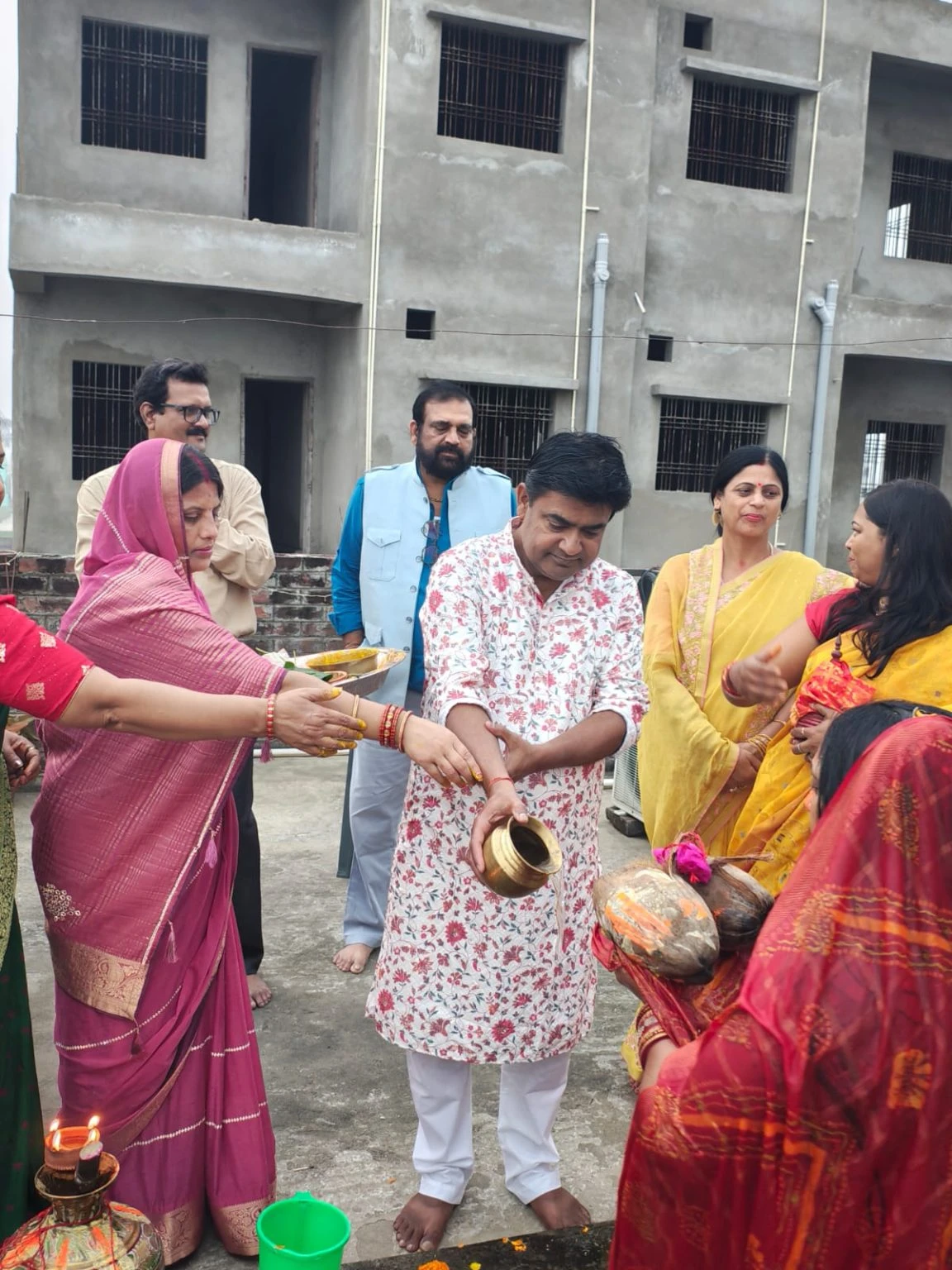
-The rigorous four-day festival of faith, austerity and deep cultural devotion, Chhath Puja, came to a serene and joyful conclusion across Bihar. On the final morning of the Mahaparv, thousands of devotees gathered before dawn at riverbanks and water bodies to offer Usha Arghya to the rising Sun God (Bhagwan Bhaskar), praying for the health, prosperity and well-being of their families and society.

CHHATH PUJA CONCLUDED WITH DEVOTION
16-NOV-ENG 4


RAJIV NAYAN AGRAWAL
ARA--------------------------The rigorous four-day festival of faith, austerity and deep cultural devotion, Chhath Puja, came to a serene and joyful conclusion across Bihar. On the final morning of the Mahaparv, thousands of devotees gathered before dawn at riverbanks and water bodies to offer Usha Arghya to the rising Sun God (Bhagwan Bhaskar), praying for the health, prosperity and well-being of their families and society.
In the rich cultural tapestry of India, festivals are more than mere celebrations; they are profound expressions of gratitude toward nature, community and the cosmic forces that sustain life. Among the most rigorous, spiritually charged and ancient observances is Chhath Puja—the four-day Mahaparv dedicated to Surya, the Sun God, and Chhathi Maiya. Observed with unmatched devotion primarily in Bihar, Jharkhand, Uttar Pradesh and parts of Nepal, the festival today resonates across India and the global diaspora.
Chhath Puja finds its echoes deep within Hindu scriptures and ancient traditions. According to historical lore and scholarly insights, its roots stretch back to antiquity. One widely accepted legend connects the festival to the Mahabharata, where Draupadi and the Pandavas performed the rigorous rituals to overcome hardships and regain their lost kingdom during exile. It is also believed that Surya Putra Karna, the valiant warrior and ruler of Anga, initiated the practice of offering daily prayers and water (arghya) to the Sun God.
Another prominent narrative recounts that upon returning to Ayodhya after 14 years of exile, Lord Rama and Sita observed a fast and offered prayers to the Sun God during Shukla Paksha in the month of Kartika. Folklore further tells of King Priyavrata and his wife Malini, who, after much grief, were blessed with a child through a sacred fire ritual. They witnessed the divine grace of Devi Chhathi—the celestial embodiment of nature’s primal energy and the sister of dawn—leading to the widespread custom of worshipping her for the well-being of children.
Unlike festivals marked by casual festivity, Chhath is a demanding test of physical endurance, mental discipline and absolute purity, spanning four distinct days:
Devotees begin by taking a holy dip in sacred rivers such as the Ganga or Sone. Homes and surroundings undergo rigorous cleaning. Vratis consume a single traditional meal of bottle gourd (kaddu) and rice, cooked meticulously on mud stoves using earthen or copper utensils and mango wood.
Observing a day-long fast, devotees break it only after sunset following the worship of Mother Earth. They offer kheer and puri, after which begins the arduous, uninterrupted 36-hour nirjala fast—abstaining from even a drop of water.
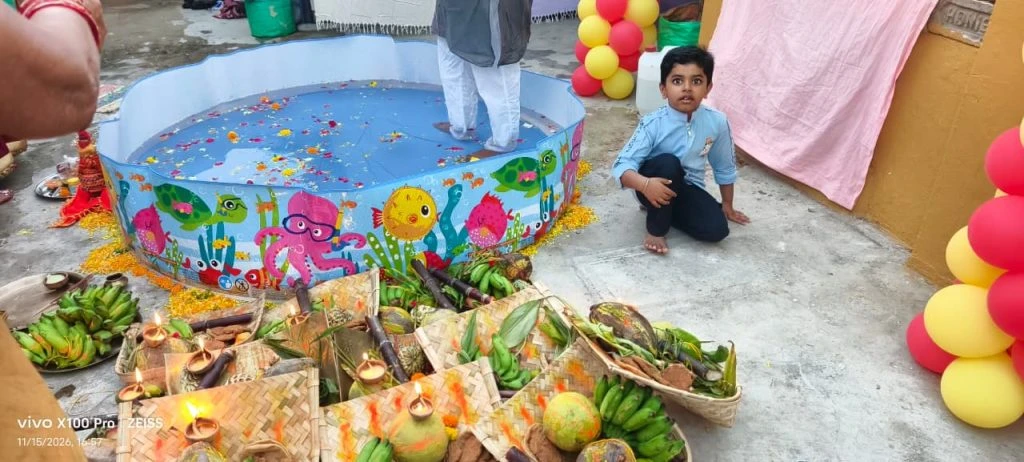
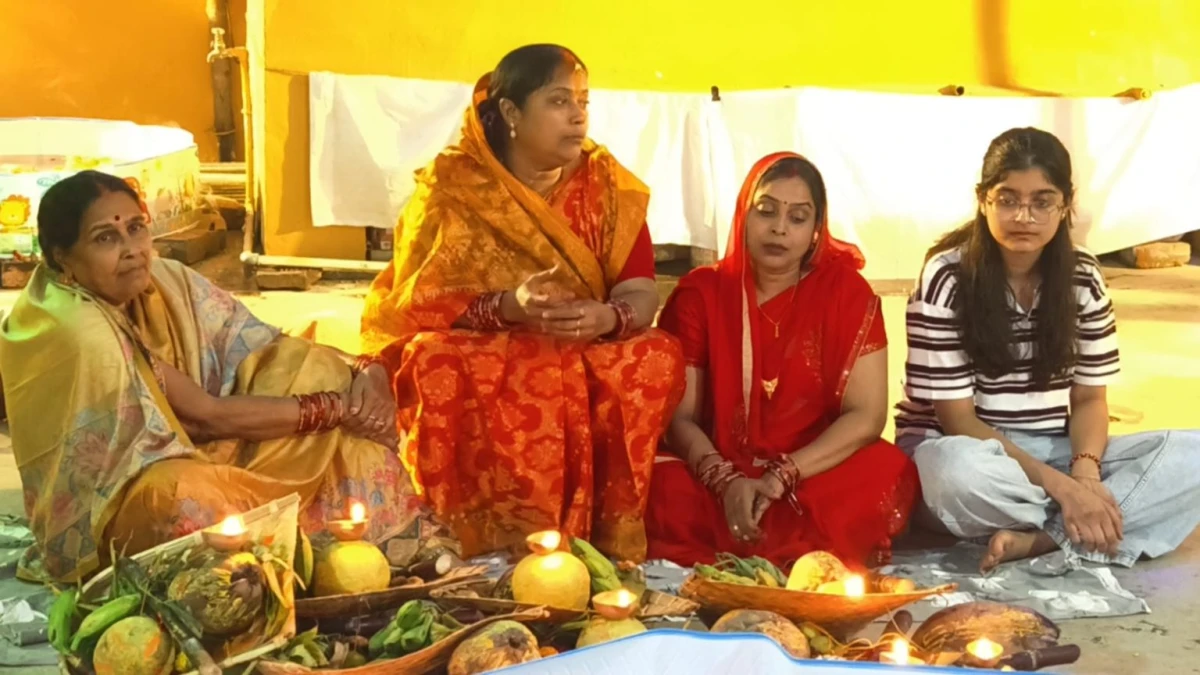
The main day of Chhath. Families process toward riverbanks or water bodies carrying bamboo baskets (daura and soop) filled with offerings. Dressed in vibrant yellow attire, devotees stand waist-deep in water to offer evening arghya to the setting sun, appreciating the beauty of closure and life’s cyclical nature. Earthen lamps are lit around five sugarcane stalks, symbolising the five elemental components of the human body.
In the crisp dawn, devotees gather once more at the water’s edge for morning offerings to the rising sun. Following the final prayers and the distribution of blessed prasad—such as traditional thekua, khasta and seasonal fruits—the fast is successfully concluded (paran).
Every element of Chhath Puja is steeped in ecological mindfulness. The strict dietary code ensures that no salt, onion or garlic touches the offerings, preserving absolute purity. The vital puja ingredients themselves form a tribute to nature’s harvest: woven bamboo winnowing trays, water-laden coconuts, sugarcane stalks with fresh leaves, turmeric and ginger plants, and seasonal fruits.
Beyond its spiritual depth, Chhath holds scientific relevance. The timing of arghya during sunrise and sunset is designed to allow the human body to safely absorb solar energy when ultraviolet radiation levels are at their lowest and most beneficial. The rigorous mental and physical discipline required during the four-day ritual further promotes detoxification, mental peace, inner resilience and emotional harmony.
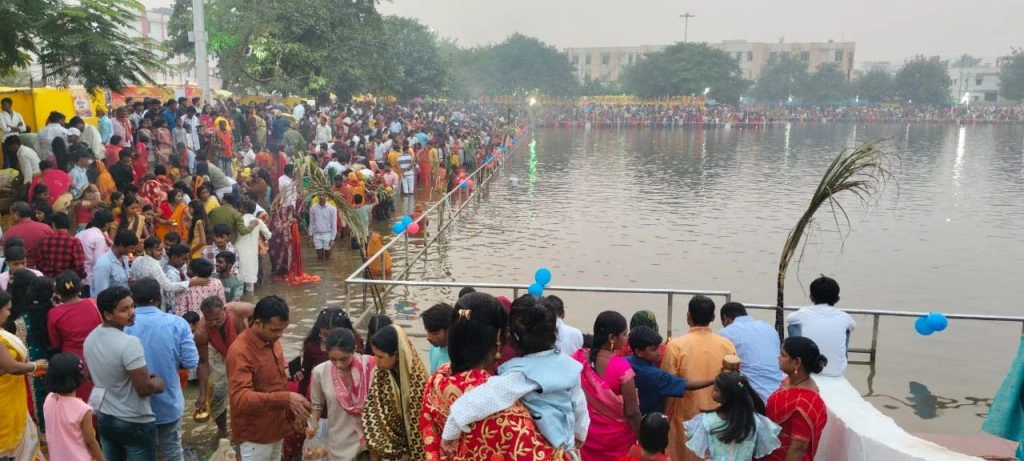
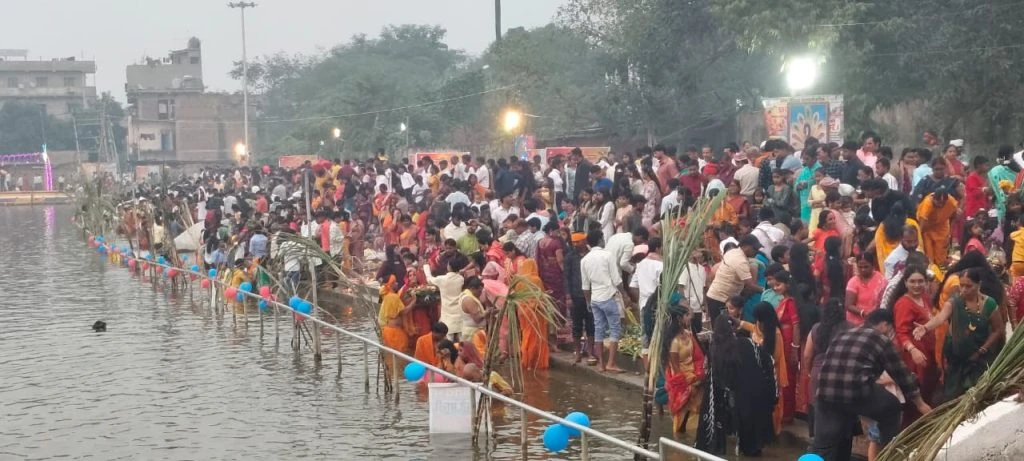
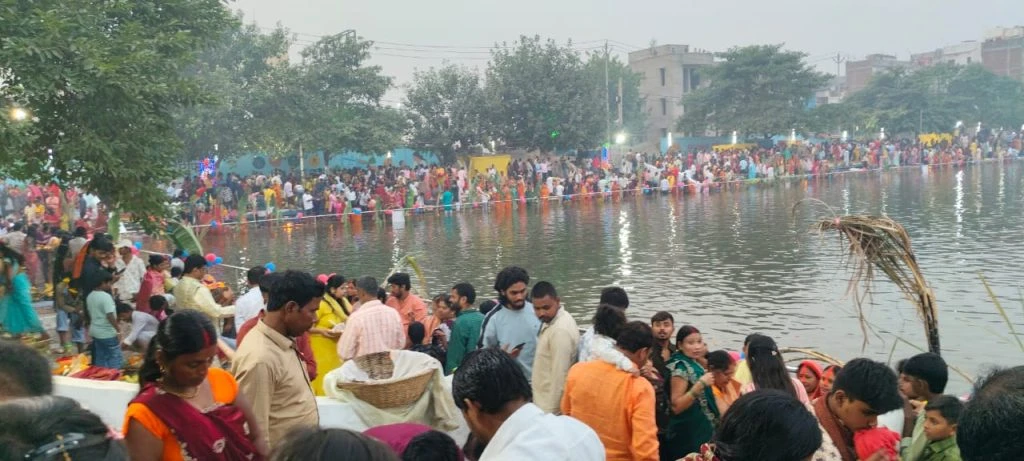
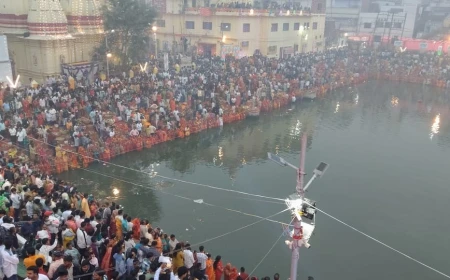
In Kaimur district, the historic Surya Sarovar in the Ramgarh police station area transformed into a breathtaking spectacle of spirituality on the final morning. Even before the first rays of the sun pierced the horizon, roads leading to the sarovar were filled with processions of devotees and their families. Carrying traditional woven bamboo baskets brimming with seasonal fruits, sugarcane, earthen lamps and sacred thekua, families arrived at the ghats singing melodious folk hymns dedicated to Chhathi Maiya.
Along the banks, rows of flickering earthen lamps illuminated the water’s edge, creating a mesmerising reflection against the early morning mist. The atmosphere resonated with rhythmic chants and heartfelt slogans praising Chhathi Maiya and Surya Dev. Standing waist-deep in the cool waters, devotees awaited sunrise with folded hands. As the golden sun emerged, they offered water and milk (arghya) to Lord Surya, praying for the health, prosperity, longevity and well-being of their families.
Following the final ritual, devotees broke their fast and distributed prasad among relatives, neighbours and onlookers—a gesture symbolising humility, gratitude and social harmony. Local families, youth volunteers and community members worked side-by-side to keep the ghats clean, assist elderly devotees and ensure smooth movement. Social workers and public representatives of the Ramgarh Nagar Panchayat were also present to extend warm greetings to all mothers, sisters and families observing the sacred fast. Their participation underscored how Chhath Puja transcends individual households to become a collective celebration of community solidarity.
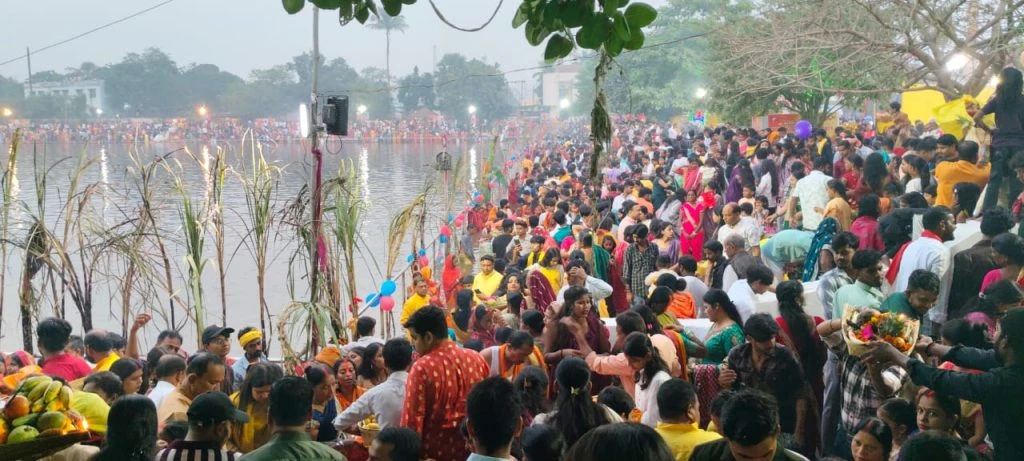
In Buxar district, the festival concluded with equal grandeur. A vast number of devotees gathered at 388 designated Chhath ghats across the district. Hundreds of thousands of worshippers offered arghya to the Sun God along the banks of the Ganges and other water bodies. Significant crowds were seen at Ramrekha Ghat, Siddhnath Ghat, Gola Ghat, Jahaj Ghat, Nath Baba Ghat, Sati Ghat, Sipahi Ghat, Puliya Ghat and Ahirauli Ghat in Buxar town, as well as Mahadeva Ghat and Rani Ghat in Chausa. Large gatherings also took place at Chhathiya Pokhara in Dumraon and Shivganga Ghat in Brahmpur.
This year, the district administration implemented comprehensive measures under the leadership of District Magistrate Sahila and Superintendent of Police Shubham Arya. Excellent arrangements for security, cleanliness, lighting and other amenities were made at the ghats. Administrative officials and police personnel remained vigilant throughout.
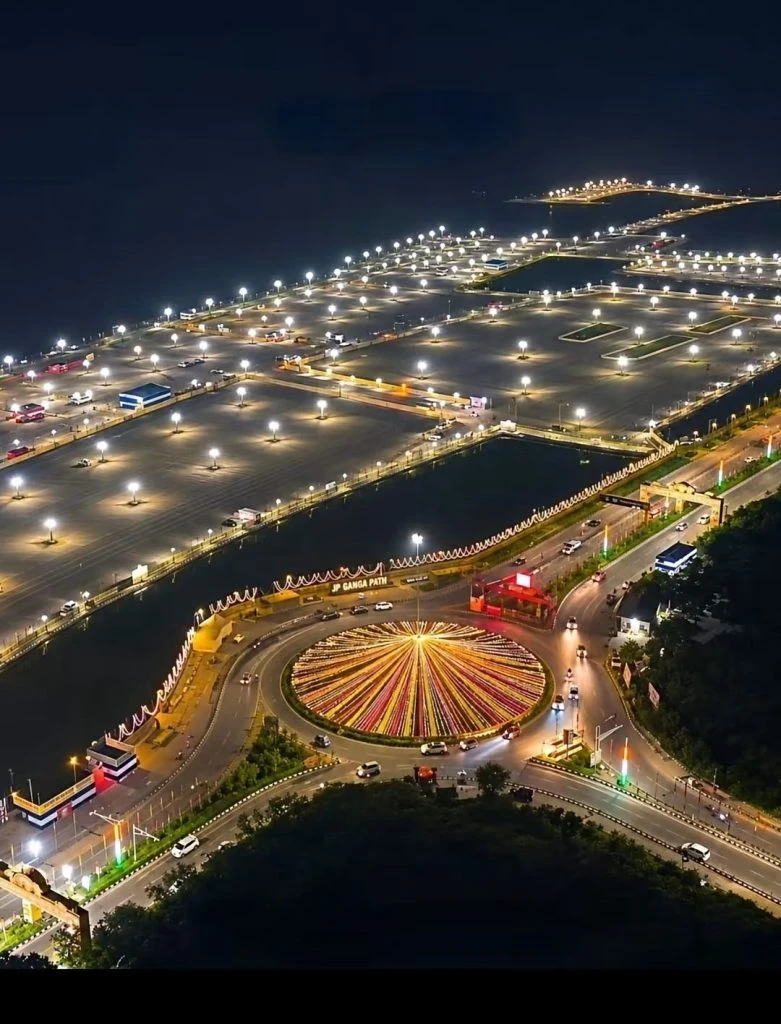
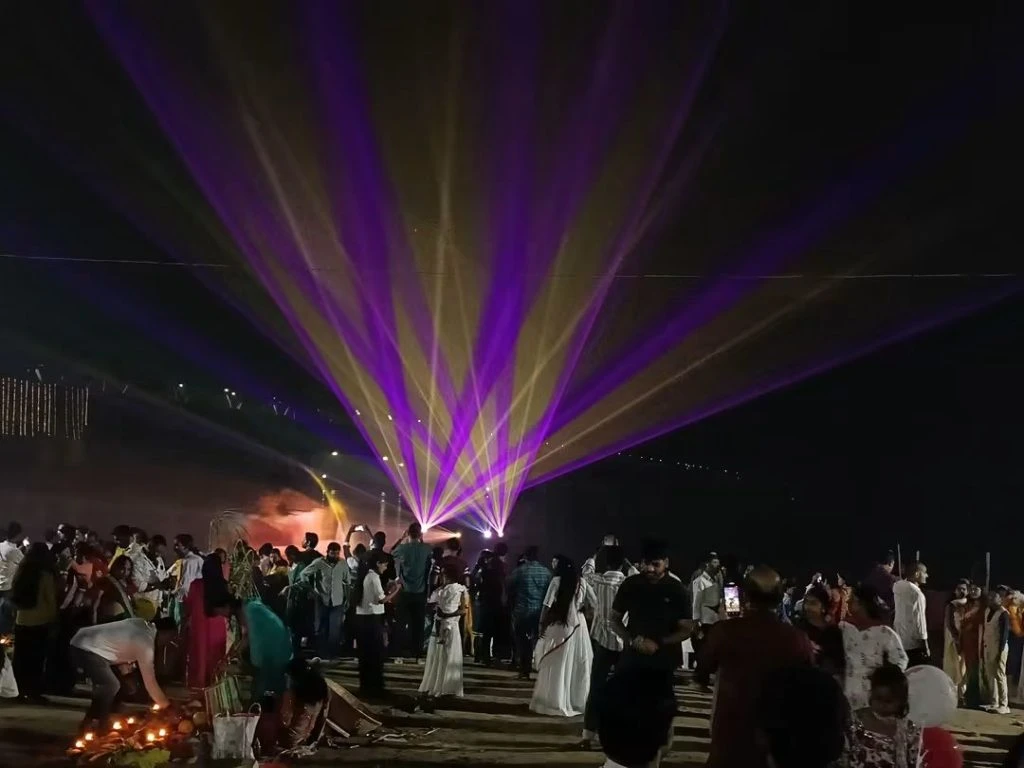
Buxar’s historic Ramrekha Ghat was developed as a ‘model Chhath ghat.’ Special decorations, elaborate lighting and a laser show projected onto a water screen created by the ripples of the Ganges became the centre of attraction. Classical singer Sukriti Mishra performed bhajan-kirtan, infusing the atmosphere with profound devotion. Service camps set up by social organisations and local residents provided tea, snacks and other essential amenities to the fasting devotees. The entire four-day festival concluded in a peaceful and deeply devotional atmosphere.
As the morning sun rose higher and families began returning home with blessed prasad, the serene scenes at Surya Sarovar in Kaimur and the crowded ghats of Buxar stood as powerful reminders of the enduring strength of faith, ecological reverence and cultural unity in rural and small-town Bihar. Year after year, millions of devotees gather at holy river ghats and water reservoirs—from Dehri-on-Sone and Sasaram to Patna, Gaya and beyond—keeping Chhath Puja alive as a luminous beacon of faith, family unity and humanity’s timeless connection to nature.
What's Your Reaction?
 Like
0
 Dislike
0
 Love
0
 Funny
0
 Wow
0
 Sad
0
 Angry
0











Comments (0)