
CHHATH MAHAPARVA BEGINS IN ARA: FOUR DAYS FAITH, FASTING ANS SUN WORSHIP COMMENCE WITH NAHAY-KHAY
-As the soft light of a Kartik morning spreads across the plains of Bhojpur, Ara wakes to the quiet rhythm of one of India’s most rigorous and purest folk festivals. The four-day Chhath Mahaparva begins today with the traditional Nahay-Khay ritual, marking the start of an intense period of devotion, austerity and collective celebration dedicated to Surya, the Sun God, and his sister Chhathi Maiya. Across the district, from the lanes of the town to the villages of Udwantnagar and beyond, devotees have completed their preparations. The air carries the fragrance of freshly washed wheat, the sound of traditional songs, and an unmistakable sense of spiritual anticipation.

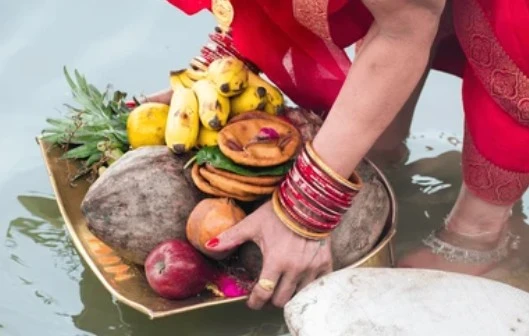
CHHATH MAHAPARVA BEGINS IN ARA: FOUR DAYS FAITH, FASTING ANS SUN WORSHIP COMMENCE WITH NAHAY-KHAY
13-NOV-ENG 1


RAJIV NAYAN AGRAWAL
ARA--------------------------As the soft light of a Kartik morning spreads across the plains of Bhojpur, Ara wakes to the quiet rhythm of one of India’s most rigorous and purest folk festivals. The four-day Chhath Mahaparva begins today with the traditional Nahay-Khay ritual, marking the start of an intense period of devotion, austerity and collective celebration dedicated to Surya, the Sun God, and his sister Chhathi Maiya. Across the district, from the lanes of the town to the villages of Udwantnagar and beyond, devotees have completed their preparations. The air carries the fragrance of freshly washed wheat, the sound of traditional songs, and an unmistakable sense of spiritual anticipation.
Chhath is not merely a festival of ritual; it is a living tradition of discipline, equality and environmental consciousness that has remained largely unchanged for centuries. In Ara and the wider Bhojpur region, it holds a special place in the cultural calendar, drawing people from every community to the banks of rivers, ponds and specially prepared ghats. The festival’s emphasis on purity, simplicity and direct communion with nature continues to set it apart from more commercialised celebrations.
The structure of Chhath is precise and progressive. Each day builds upon the previous one, moving from purification to the most severe form of fasting observed in the Hindu calendar.
November 13 – Nahay-Khay
The festival opens with Nahay-Khay, literally “bath and eat.” Devotees rise early and take a ritual bath, preferably in the Ganga or a local river or pond. Where access to flowing water is limited, a thorough bath at home with clean water is considered acceptable, provided the intention remains pure. After bathing, the kitchen is cleaned with special care. Only those who will observe the subsequent fasts prepare the day’s meal. The traditional menu is simple and sattvic: rice, chana dal (Bengal gram) and a curry of bottle gourd, known locally as kaddu or lauki. No onion, garlic or elaborate spices are used. The meal is first offered to the deity and then consumed by the devotee. The remaining portion is distributed as prasad among family members and neighbours. This act of sharing marks the beginning of the community aspect of the festival. From this point onward, the strict dietary discipline begins.
November 14
Kharna
The second day is known as Kharna. Devotees observe a complete fast without food or water from sunrise until evening. As the sun sets, they break the fast with a carefully prepared meal of roti smeared with pure ghee and kheer made from new rice, milk and jaggery. This meal is also offered first to the deity. After Kharna, the most demanding phase begins: a continuous 36-hour waterless fast that will last until the morning of the final day. The physical challenge is considerable, yet thousands of men and women across the district undertake it every year with remarkable fortitude.
November 15
SandhyakalinArghya
The third day falls on the Shashthi tithi of Kartik Shukla Paksha. In the evening, devotees gather at the ghats facing west. As the sun begins to set, they offer Arghya – water, milk, fruits and the traditional thekua – to the setting sun. This offering is understood as a prayer for the removal of misfortune and the cleansing of past burdens. The atmosphere at the ghats becomes deeply meditative. Oil lamps are lit, and the collective chanting of traditional songs creates a powerful sense of shared devotion.
November 16
SubahkaArghyaandParana
The festival reaches its climax in the pre-dawn hours of the fourth day. Devotees return to the same ghats, this time facing east, to offer Arghya to the rising sun. The morning offering is associated with hope, health, prosperity and the fulfilment of wishes. Once the sun has risen fully and the final prayers are completed, the long fast is broken with prasad in a ritual known as Parana. The breaking of the fast is a moment of both physical relief and spiritual fulfilment. Families share the remaining offerings, and the sense of community reaches its peak.
Central to Chhath is the concept of shuddhi – purity in body, mind, food and surroundings. In the days leading up to the festival, houses are thoroughly cleaned. Floors are washed, and in many homes traditional methods of purification using cow dung and water are still followed. Wheat is washed repeatedly and dried in the sun so that it can be ground fresh for thekua, the signature sweet of the festival. Thekua is prepared without yeast or chemical leavening agents; it is made from whole wheat flour, jaggery and ghee, then deep-fried until golden. Other offerings include seasonal fruits, sugarcane, coconuts and earthen lamps.
Bamboo baskets, known as soop or daura, play an important practical and symbolic role. These baskets, often freshly made or carefully cleaned, are used to carry the offerings to the ghat. The sight of women carrying these baskets on their heads, walking in groups towards the water, remains one of the most distinctive visual images of Chhath in Bihar.
In the week before the festival, Ara’s markets transform. Crowds throng the shops selling bamboo baskets, earthen diyas, seasonal fruits, incense and new clothes. The demand for pure ghee, jaggery and new rice rises sharply. Street vendors and established traders alike prepare for the surge. Many families buy new utensils or at least ensure that the ones used for Chhath cooking are set aside and used only for this purpose.
At the same time, the local administration has been working to ready the ghats. Across the district, including at important sites in Udwantnagar, temporary structures are being completed, electric lighting is being arranged, approach roads are being cleaned, and safety measures are being put in place around deeper or more hazardous water bodies. Crowd management plans are activated, and efforts are made to maintain cleanliness so that the purity expected by devotees is not compromised by civic neglect. The administration’s involvement reflects the scale of participation: Chhath is not a private observance but a public and collective event that brings together people from every social and economic background.
What distinguishes Chhath from many other festivals is its direct engagement with the natural elements. There is no temple idol at the centre of the worship. The sun itself is the deity. Devotees stand in water, often knee-deep or deeper, and offer water and milk while facing the setting and rising sun. The ritual is open to the sky, performed in public, and requires no intermediary priest. This accessibility has helped Chhath retain a strongly egalitarian character. Men and women, rich and poor, upper caste and lower caste, all stand together at the same ghat, following the same rigorous discipline.
The festival also carries an implicit environmental ethic. Cleanliness of the body, the home and the water body is non-negotiable. In recent years, this traditional emphasis has found new relevance as concerns about river pollution and plastic waste have grown. Many local groups use the occasion of Chhath to promote cleaner ghats and responsible disposal of offerings after the rituals are complete.
Songs form another vital layer of the tradition. The Chhath geet, sung in the local Bhojpuri dialect, narrate stories of Chhathi Maiya, express longing, gratitude and the hardships of the fast. These songs are passed down orally and continue to be sung in homes and at the ghats, keeping the emotional and cultural memory of the festival alive across generations.
One of the most striking features of Chhath in Ara and surrounding areas is the way it cuts across social divisions. Neighbours help one another with preparations. Those who are not fasting still participate by assisting with cooking, cleaning or simply by joining the evening gatherings at the ghats. The distribution of prasad after Nahay-Khay and after the final Arghya reinforces bonds of reciprocity. In a region that has known its share of social tensions, the festival functions as an annual reaffirmation of shared cultural belonging.
The administration’s emphasis on safety and crowd management is matched by the devotees’ own sense of discipline. Despite the large numbers that gather at popular ghats, the overall atmosphere remains one of quiet intensity rather than chaotic celebration. The focus stays on the ritual, the fast and the relationship with the sun.
Even as Ara and Bihar modernise, Chhath has shown remarkable continuity. Urban families continue to observe the full sequence of rituals. Young people who work in other cities often return home for the festival. Social media now carries images and live videos from the ghats, yet the core practices – the waterless fast, the offering of Arghya, the preparation of thekua – remain essentially the same as those followed by earlier generations.
This continuity is not accidental. It rests on the festival’s ability to combine personal austerity with collective participation, and spiritual discipline with a deep connection to the natural cycle of day and night. In an age of increasing complexity and distraction, Chhath offers a clear, demanding and ultimately purifying path.
As devotees in Ara complete the Nahay-Khay ritual today, the next three days will test their physical endurance and deepen their sense of devotion. Markets will remain busy, ghats will fill with people, and the traditional songs will continue to rise with the evening and morning light. On Monday, when the final Arghya is offered to the rising sun and the long fast is broken, the festival will leave behind not only a sense of spiritual accomplishment but also a renewed feeling of community.
Chhath Mahaparva in Ara is more than a religious observance. It is a four-day reaffirmation of faith in the life-giving power of the sun, in the value of self-discipline, and in the possibility of collective harmony. As the first day unfolds across the district, the people of Bhojpur once again demonstrate why this ancient festival continues to command such deep respect and participation.
The sun will rise and set over the same waters for the next three days. Thousands will stand before it, offering water, light and the strength of their vows. In that simple, powerful act, the living tradition of Chhath continues.
What's Your Reaction?
 Like
0
 Dislike
0
 Love
0
 Funny
0
 Wow
0
 Sad
0
 Angry
0










Comments (0)