
CELEBRATING FAITH, FAMILY AND UNITY: THE DEEP CULTURAL ESSENCE OF CHHATH PUJA IN ARA
-In an era characterized by rapid urbanization, nuclear households, and fast-paced digital lives, few cultural traditions retain the magnetic pull to halt migration in reverse and reunite generations under a single roof. Across Bihar and eastern India, however, the four-day grand festival of Chhath Puja achieves precisely that. More than an ancient Vedic ritual dedicated to the Sun God (Surya) and Chhathi Maiya, Chhath stands as an enduring testament to social solidarity, familial interdependence, and environmental reverence.

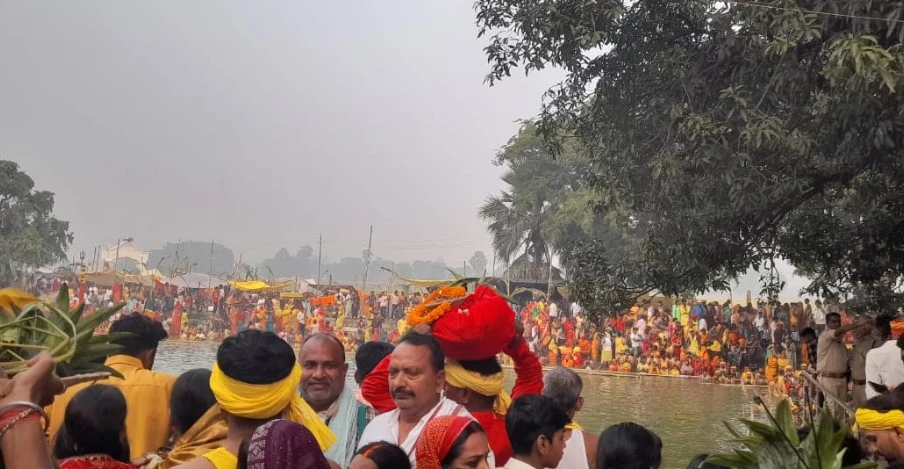
CELEBRATING FAITH, FAMILY AND UNITY: THE DEEP CULTURAL ESSENCE OF CHHATH PUJA IN ARA
16-NOV-ENG 1


RAJIV NAYAN AGRAWAL
ARA----------------------------In an era characterized by rapid urbanization, nuclear households, and fast-paced digital lives, few cultural traditions retain the magnetic pull to halt migration in reverse and reunite generations under a single roof. Across Bihar and eastern India, however, the four-day grand festival of Chhath Puja achieves precisely that. More than an ancient Vedic ritual dedicated to the Sun God (Surya) and Chhathi Maiya, Chhath stands as an enduring testament to social solidarity, familial interdependence, and environmental reverence.
In historic towns like Arrah—the cultural heartland of Bhojpur district in Bihar—the festival transforms neighborhoods, rooftops, and riverbanks into vibrant spaces of collective devotion. Through ground reports and intimate conversations with multi-generational households, a profound truth emerges: Chhath Puja is fundamentally a festival of togetherness, one whose rigorous purity and intricate rituals simply cannot be shouldered in isolation.
Unlike many other celebrations marked by grandeur, fireworks, or commercial extravagance, Chhath Puja is defined by austerity, ecological mindfulness, and absolute shuddhata (purity). From the very first day of Nahay Khay—where devotees bathe in holy waters and prepare a simple, sattvic meal of bottle gourd (lauki) and rice—the entire household enters a state of heightened discipline and mindfulness.
Every step of the four-day observance demands meticulous preparation, making it an inherently collective endeavor:
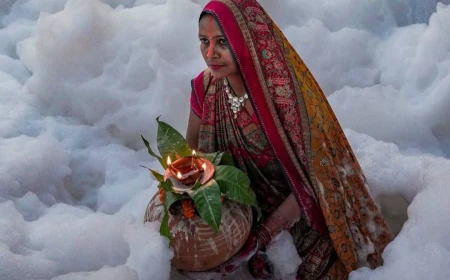
Unlike festivals reliant on synthetic decorations, Chhath revolves entirely around earth-friendly materials. Families procure traditional woven bamboo baskets (daura) and winnowing trays (soop), earthen lamps (diyas), sugarcane stalks with leaves intact, seasonal fruits like pomelo (gagal nimbu), bananas, water chestnuts (singhara), and turmeric plants.
The iconic sacred offering of Chhath, thekua—a crisp, deep-fried sweet made from whole wheat flour, jaggery, and ghee—is prepared on freshly plastered mud stoves (mitti ka chulha) using mango wood. Crucially, the wheat used for thekua is washed, sun-dried under watchful eyes so no bird touches it, and ground specifically for the occasion.
Even the smallest details reflect devotion to nature and purity. Devotees use fresh mango twigs (aam ka datun) to brush their teeth during the fast, symbolizing an unbroken bond with organic, sustainable living.
Because no single individual—especially a vrati (devotee) observing a grueling 36-hour fast without food or water—can manage these tasks alone, Chhath naturally dissolves individual boundaries. Every member of the household, regardless of age or gender, assumes a distinct responsibility.
In contemporary urban India, the joint family structure has steadily given way to smaller, nuclear units. Yet, during Chhath, Bihar’s deeply rooted joint family ethos comes roaring back to life. As observed in Arrah, the festival acts as an annual homecoming that bridges geographical distances and generational divides.
For days leading up to the festival, trains and highways heading into Bihar overflow with professionals, students, and families returning from metropolitan hubs and neighboring cities like Ranchi, Delhi, Kolkata, and Mumbai. For many, missing Chhath is unthinkable. The pull is not merely religious obligation; it is the emotional gravity of belonging to a larger familial tapestry.
Inside ancestral homes in Arrah, the hierarchy of service and care becomes visible in everyday moments:
Grandparents and senior family members often serve as the spiritual pillars, guiding the younger generation through folk songs (Chhath geet) passed down orally for centuries. In many households, the mantle of observing the fast is passed gradually from elders to daughters-in-law and sons, preserving continuity.
Parents, aunts, and uncles coordinate logistics—cleaning the house from top to bottom, arranging ingredients, constructing temporary ghats on rooftops when riverbanks are crowded, and ensuring the vratis remain comfortable during their rigorous penance.
Perhaps the most heartwarming aspect of Chhath in Arrah is the excitement among children who travel from cities like Ranchi to spend the holidays with their extended families. For young minds accustomed to apartment living, helping clean rooftops, carrying small baskets, decorating makeshift ghats, and sitting surrounded by cousins, dada-dadi (paternal grandparents), and bua-chacha (aunts and uncles) becomes a living classroom of culture and values.
Through shared labor and laughter, children absorb lessons in patience, gratitude, and respect for elders—values that no textbook can replicate.
While ancient rivers like the Ganga and the Sone remain iconic centers for Chhath gatherings, changing urban landscapes and convenience have also popularized rooftop ghats (chhat par ghat) across towns like Arrah. Families meticulously clean their terraces, construct clean water tanks lined with bricks and tarpaulin, and decorate the space with banana trunks, marigold garlands, and glowing earthen lamps.
Even when celebrated at home, the festival never becomes private or exclusionary. Neighbors visit one another’s rooftops, share folk songs, and assist in carrying the heavy daura to the water's edge. On the streets leading to public ghats, local communities and youth groups voluntarily sweep the roads, sprinkle water to settle dust, arrange lighting, and set up medical and refreshment stalls for passing devotees.
In this atmosphere, social hierarchies momentarily fade. At the ghat, people from every walk of life stand shoulder-to-shoulder in waist-deep water, facing the same horizon, offering the exact same humble gifts of nature to the sun. There are no priests mediating the ritual; Chhath is unique in Hindu tradition for allowing direct communion between the devotee and the divine source of cosmic energy.
The emotional and spiritual intensity of Chhath peaks on the third and fourth days, following Kharna (the second day, when devotees break a day-long fast in the evening with roti and jaggery kheer before beginning the strict 36-hour nirjala fast without even a drop of water).
On the afternoon of the third day, processions wind their way toward rivers, ponds, and decorated rooftops. Male family members carry the heavy bamboo daura balanced carefully on their heads—a gesture of humility and devotion—while women walk alongside singing melodious Chhath geet dedicated to Chhathi Maiya, praying for the longevity, health, and prosperity of their children and family.
During Sandhya Arghya (evening offerings), devotees stand in water as the sun descends toward the horizon, offering milk and water from soops filled with fruits and thekua. In a world that predominantly worships the rising sun—symbolizing power, beginnings, and ascendance—Chhath stands apart by honoring the setting sun first. It teaches a profound philosophical lesson: gratitude must be offered not only to what is rising, but also to what is completing its cycle and sustaining life quietly.
The following morning, before dawn breaks, families gather once again in the crisp November chill for Usha Arghya (morning offerings). As the first golden rays pierce the mist, devotees offer their final prayers, seek blessings from elders, and distribute prasad—especially thekua—to relatives, neighbors, and passersby. Asking for prasad during Chhath is considered a gesture of humility, and sharing it reinforces community bonds long after the lamps have dimmed.
What's Your Reaction?
 Like
0
 Dislike
0
 Love
0
 Funny
0
 Wow
0
 Sad
0
 Angry
0












Comments (0)