
PRESERVING BIHAR CENTURY OLD BAMBOO CRAFT
-As the sacred waters of the Ganga and other rivers across Bihar prepare to host the devout during Chhath Puja, an age-old craft is once again coming into its own. The traditional bamboo-woven soop (winnowing tray) and daura (shallow basket) — indispensable ritual items offered to the setting and rising Sun — are witnessing a dramatic surge in demand. Local artisans report that sales of these handcrafted pieces jump by as much as 20 times during the festival season, turning a quiet traditional skill into a profitable livelihood for thousands of families.

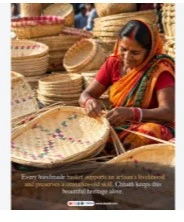
PRESERVING BIHAR CENTURY OLD BAMBOO CRAFT
9-NOV-ENG 9


RAJIV NAYAN AGRAWAL
ARA---------------------------------As the sacred waters of the Ganga and other rivers across Bihar prepare to host the devout during Chhath Puja, an age-old craft is once again coming into its own. The traditional bamboo-woven soop (winnowing tray) and daura (shallow basket) — indispensable ritual items offered to the setting and rising Sun — are witnessing a dramatic surge in demand. Local artisans report that sales of these handcrafted pieces jump by as much as 20 times during the festival season, turning a quiet traditional skill into a profitable livelihood for thousands of families.
For centuries, bamboo craft has been woven into the cultural and economic fabric of Bihar. In villages across the state, particularly in regions rich in bamboo, skilled hands transform slender strips of the plant into sturdy, elegant soops and dauras. These items are not mass-produced; each piece carries the distinctive patterns and textures of folk artistry passed down through generations. During Chhath Puja, the soop holds the prasad of thekua, fruits, and sugarcane, while the daura is used in the elaborate offerings made at the riverbank. Their pure, natural material is considered essential for the purity of the ritual.
This seasonal spike brings more than temporary income. It breathes new life into a craft that has faced challenges from plastic alternatives and changing lifestyles. Artisans who spend the rest of the year making baskets, mats, and other utilitarian items suddenly find their workshops overflowing with orders. Families work late into the night, splitting bamboo, weaving, and finishing pieces to meet the rush. The economic boost is significant in rural areas where alternative employment remains limited.
What makes the current wave particularly encouraging is the expanding market beyond Bihar’s borders. The distinctive design and cultural authenticity of Bihar’s soop and daura are gaining appreciation in other Indian states and even overseas. Diaspora communities celebrating Chhath in cities across India, the Gulf, Europe, and North America are increasingly seeking authentic bamboo items rather than substitutes. This growing recognition is helping artisans command better prices and encouraging younger members of craft families to continue the tradition rather than migrate for other work.
The revival is not merely commercial. It is cultural. Every soop and daura sold during Chhath is a quiet affirmation that indigenous knowledge systems still hold value. In an age of rapid industrialization, the continued preference for handwoven bamboo items during one of Bihar’s most important festivals demonstrates the resilience of traditional practices. Government schemes supporting bamboo cultivation and craft clusters, along with occasional exhibitions and online platforms, are beginning to provide additional support, though much of the demand remains driven by the pure pull of ritual and nostalgia.
As the four-day Chhath Puja unfolds each year, the rhythmic sound of bamboo being split and woven in village courtyards becomes part of the festival’s soundtrack. The soop and daura are more than ritual objects; they are living links to Bihar’s artisanal heritage. The dramatic rise in their demand is a hopeful sign that this centuries-old craft is not fading into history but finding renewed relevance — sustained by faith, culture, and the skilled hands that keep the tradition alive.
What's Your Reaction?
 Like
0
 Dislike
0
 Love
0
 Funny
0
 Wow
0
 Sad
0
 Angry
0











Comments (0)