
A FESTIVAL, MANY TRADITION, ONE MESSAGE: DEVANAND SINGH
-Diwali is not merely a celebration of lights; it is an integral part of India’s rich cultural heritage. India is a land of festivals, and Diwali stands as a beautiful symbol of its cultural unity, religious faith, and social harmony. The essence of Diwali extends beyond lighting lamps, sharing sweets, or bursting firecrackers; it inspires us to move from darkness toward light, from despair toward hope, and from falsehood toward truth. Its greatest beauty lies in the fact that while it is celebrated with diverse traditions and beliefs across different states of India, the core message remains the same everywhere: the triumph of good over evil and light over darkness.


A FESTIVAL, MANY TRADITION, ONE MESSAGE: DEVANAND SINGH
9-NOV-ENG 4


RAJIV NAYAN AGRAWAL
ARA----------------------------Diwali is not merely a celebration of lights; it is an integral part of India’s rich cultural heritage. India is a land of festivals, and Diwali stands as a beautiful symbol of its cultural unity, religious faith, and social harmony. The essence of Diwali extends beyond lighting lamps, sharing sweets, or bursting firecrackers; it inspires us to move from darkness toward light, from despair toward hope, and from falsehood toward truth. Its greatest beauty lies in the fact that while it is celebrated with diverse traditions and beliefs across different states of India, the core message remains the same everywhere: the triumph of good over evil and light over darkness.
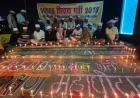
In North India, Diwali is associated with the legend of Lord Rama’s return to Ayodhya after 14 years of exile. It is believed that upon the arrival of Lord Rama, Goddess Sita, and Lakshmana, the people of Ayodhya welcomed them by illuminating the entire city with earthen lamps. Even today, the 'Deepotsav' (festival of lamps) held on the banks of the Saryu River in Ayodhya serves as a living embodiment of this tradition. The sight of 'Ram Ki Paidi'—aglow with the light of hundreds of thousands of lamps—is not just an expression of religious faith, but a testament to the glorious heritage of Indian culture.
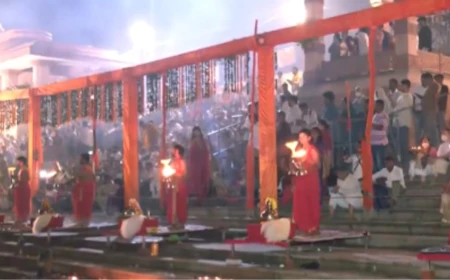
Meanwhile, in Varanasi, 'Dev Diwali'—celebrated on Kartik Purnima, shortly after Diwali—holds a unique spiritual significance. According to religious belief, on this day, the deities themselves descend to Earth to celebrate with lamps along the ghats of the Ganges. The rows of countless lamps lining the ghats of Kashi, combined with the ethereal spectacle of the Ganga Aarti, showcase the grandeur of India’s spiritual traditions. In Jaipur, the capital of Rajasthan, Diwali is celebrated with a distinct, royal flair. Markets adorned with lights, historic buildings, and the traditional 'Mandana' art drawn at the thresholds of homes lend a unique character to this festival.
Meanwhile, in Kolkata, West Bengal, the worship of Goddess Kali on the night of Diwali holds special significance; grand Kali Puja celebrations are organized there. There is also a tradition of lighting 14 lamps on 'Bhoot Chaturdashi,' which precedes Diwali. In South India, too, Diwali is celebrated with distinct religious beliefs—in many regions, it marks the slaying of the demon Narakasura by Lord Krishna, symbolizing the victory of good over evil. Thus, every region of the country carries forward the message of Diwali through its own unique traditions.
In these changing times, it is essential to understand the core purpose of Diwali. Today, in some places, the festival is becoming limited to mere ostentation and noise. Air and noise pollution caused by fireworks, along with a tendency toward social showmanship, are overshadowing the true spirit of the festival. The real joy of Diwali lies in ensuring that, alongside our own homes, the light of happiness also illuminates the lives of those in need. India’s true strength lies in the unity hidden within its diversity. We should celebrate Diwali as a grand festival of human values, social harmony, and cultural unity.
Key Dimensions of the Celebration
• Diwali of Traditions: Exploring the distinct customs of places like Ayodhya, Kashi, Jaipur, and Kolkata, and understanding their cultural significance.
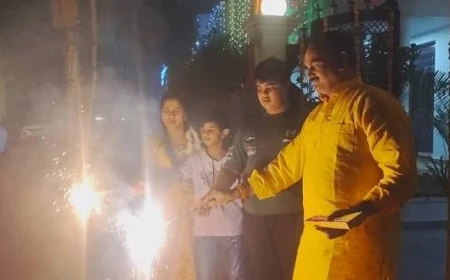
• Diwali with Family: Decorating with traditional lamps, performing prayers at home, and engaging in cultural activities with family.
• Diwali of Service and Harmony: Distributing sweets, clothing, and lamps to families in need.
• Diwali in Harmony with Nature: Lighting earthen lamps and promoting a pollution-free celebration.
• Diwali of Local Culture: Encouraging the unique traditions and folk arts specific to one's own city or region.
What's Your Reaction?
 Like
0
 Dislike
0
 Love
0
 Funny
0
 Wow
0
 Sad
0
 Angry
0






Comments (0)