
CRISIS IN SANDESH’S SANITATION SYSTEM
--The people responsible for keeping villages clean are themselves struggling with neglect, financial uncertainty and inadequate working conditions. A ground report from Kori Panchayat in Sandesh block of Bhojpur district, Bihar, has exposed the difficult circumstances faced by sanitation workers engaged under the Swachh Bharat Mission (Lohia Swachh Bihar Abhiyan).

CRISIS IN SANDESH’S SANITATION SYSTEM


18-NOV-ENG 2
RAJIV NAYAN AGRAWAL
ARA--------------------------The people responsible for keeping villages clean are themselves struggling with neglect, financial uncertainty and inadequate working conditions. A ground report from Kori Panchayat in Sandesh block of Bhojpur district, Bihar, has exposed the difficult circumstances faced by sanitation workers engaged under the Swachh Bharat Mission (Lohia Swachh Bihar Abhiyan).
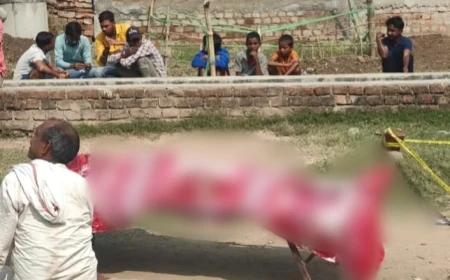
A large number of garbage collectors recently came together to highlight their grievances, drawing attention to what they described as prolonged administrative indifference, delayed payments, a shortage of essential equipment and the poor condition of waste collection vehicles. Their complaints have raised serious questions about the implementation of the rural sanitation programme at the grassroots level.
The most pressing concern raised by the sanitation workers was the irregular payment of their monthly remuneration. Several workers alleged that they had not received their wages for extended periods, with some claiming that payments had remained pending for more than a year.
The workers said that despite performing their daily duties, they were being forced to struggle to meet their household expenses because of the uncertainty surrounding their earnings. They also alleged that the amounts paid were sometimes restricted or that payments were not released regularly.
For workers belonging to economically weaker sections, the delay in even a modest monthly payment can create serious hardship. They appealed to the concerned authorities to investigate the pending payments and ensure that their dues are cleared without further delay.
Equally disturbing were the complaints regarding the absence of basic protective equipment. According to the workers, they have not been adequately provided with uniforms, shoes, masks and gloves, which are essential for anyone engaged in handling and collecting household waste.
Without these basic safeguards, sanitation workers remain exposed to potentially hazardous materials, contaminated waste, sharp objects and unhygienic conditions. The situation raises concerns about their health, safety and dignity.
The workers questioned how they could be expected to maintain cleanliness in the community when their own working conditions remained so inadequate. They demanded that the administration provide proper uniforms and protective equipment to every sanitation worker.
The condition of waste collection vehicles has added to their difficulties. Workers complained that several e-rickshaws and collection carts were damaged, broken or inadequately maintained.
As a result, transporting garbage from different wards has become increasingly difficult. Workers said that the lack of properly functioning vehicles affects the regularity and efficiency of waste collection, placing an additional physical burden on those responsible for the work.
They urged the authorities to repair damaged vehicles, ensure regular maintenance and arrange adequate transportation facilities so that waste collection can be carried out smoothly.
Another major concern raised during the gathering was the shortage of manpower. Sanitation workers from different wards, including Chela and Sundarpur, as well as wards 2, 6, 7, 9, 10, 12, 13 and 14, described the difficulties they face while carrying out their responsibilities.
According to their accounts, many workers have to manage heavy collection carts single-handedly, making the task physically exhausting. The absence of sufficient supporting staff increases their workload and makes it difficult to cover their assigned areas efficiently.
They maintained that proper staffing arrangements are necessary to ensure that sanitation services are delivered regularly without placing an unreasonable burden on individual workers.
Several workers and local representatives, including Sanjay Kumar, Angad Kumar Paswan, Ramesh Ram and Ramesh Singh, raised their concerns and appealed to the local administration and other responsible authorities to take immediate action.
Their demands include the release of all pending remuneration, timely monthly payments, the distribution of uniforms and protective equipment, repairs to damaged e-rickshaws and collection carts, and adequate manpower for waste collection.
The workers stressed that their demands were not merely about financial benefits but also about the basic facilities and dignity necessary to perform their duties safely and effectively.
The situation in Kori Panchayat highlights a contradiction at the heart of grassroots sanitation initiatives. While cleanliness campaigns encourage citizens to maintain hygienic surroundings and promote community participation, the workers who carry out this essential responsibility often face inadequate facilities and financial insecurity.
The Swachh Bharat Mission has placed sanitation and cleanliness at the centre of India's development agenda. However, the success of such programmes depends not only on infrastructure, awareness campaigns and administrative targets but also on the welfare of the people who implement them on the ground.
Sanitation workers are an indispensable part of the rural public health system. Their work protects communities from unhygienic surroundings and contributes to a healthier environment. Yet, delayed wages, insufficient safety equipment, broken vehicles and staff shortages undermine both their morale and the effectiveness of sanitation services.
The grievances raised by the workers of Kori Panchayat therefore deserve serious consideration. The concerned authorities need to examine their complaints, verify pending dues and take concrete corrective measures.
A clean village cannot be built by overlooking the people who clean it. Ensuring timely wages, safe working conditions, adequate equipment and respect for sanitation workers must be treated as an essential responsibility of local governance, rather than an optional administrative concern.
What's Your Reaction?
 Like
0
 Dislike
0
 Love
0
 Funny
0
 Wow
0
 Sad
0
 Angry
0














Comments (0)