
IS EDUCATION A PUBLIC SERVICE OR A BUSINESS: DEVANAND SINGH
In this country, education is often described as the most significant instrument for securing rights, ensuring equal opportunity, and driving social change. During election seasons, political parties—whether in power or in the opposition—make grand promises regarding the future of the youth, employment, and better education. However, as education becomes increasingly inaccessible to the common person, it is inevitable that the reality behind these promises should be questioned.

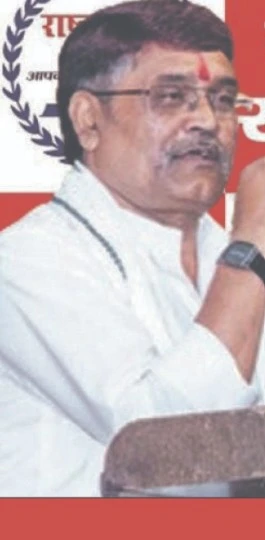
IS EDUCATION A PUBLIC SERVICE OR A BUSINESS: DEVANAND SINGH


18-NOV-ENG 18
RAJIV NAYAN AGRAWAL
ARA---------------------------In this country, education is often described as the most significant instrument for securing rights, ensuring equal opportunity, and driving social change. During election seasons, political parties—whether in power or in the opposition—make grand promises regarding the future of the youth, employment, and better education. However, as education becomes increasingly inaccessible to the common person, it is inevitable that the reality behind these promises should be questioned.
A report by TransUnion CIBIL indicates that the average size of an education loan was ₹14.3 lakh in 2023, which decreased to ₹7.5 lakh by the first half of 2026. Between January and June 2026, 42 percent of the education loans disbursed were for amounts less than ₹1 lakh. These figures do not merely reflect shifts within the banking system; they also illustrate the intense economic pressure faced by middle-class and poor families across the country.
The most pressing question is: why is education becoming so prohibitively expensive? From schools and universities to medical and engineering colleges, the fee structures are breaking the backs of ordinary families. In private educational institutions, everything—from admissions and textbooks to hostels and other amenities—has been transformed into a commercial enterprise. In these "temples of learning," the focus has shifted from the pursuit of knowledge to the collection of fees and the generation of profit.
It is a cruel irony that in a nation where education is ostensibly a tool for social change, parents are often forced to stake their land, jewelry, and lifelong savings just to secure a quality education for their children. A talented child from a poor family may be left behind due to financial constraints, while those with wealth can simply "buy" an education. Is this the democratic model of equal opportunity?
Political parties must recognize that education is not a means to boost the profits of industrialists; rather, it represents the future of the nation’s next generation. The role of private institutions cannot be denied, yet the unchecked commercialization of education is equally unjustifiable.
In a democracy, it is the duty of the opposition to hold those in power accountable; however, the opposition’s silence on a fundamental issue like education raises serious questions about its own accountability within the democratic framework.
The nation requires a political leadership that guarantees quality, affordable education for every child, rather than one that merely peddles dreams of degrees and employment from election platforms. After all, in a country where education becomes a luxury for the wealthy and a desperate necessity for the poor, talk of social justice and equality is reduced to nothing more than empty election slogans.
Ultimately, the question must be directed at both the ruling party and the opposition: will the public truly gain the right to education, or will the future remain secure only for those who profit from the business of education?
What's Your Reaction?
 Like
0
 Dislike
0
 Love
0
 Funny
0
 Wow
0
 Sad
0
 Angry
0







Comments (0)