
WITH HERMITAGES OF FIVE SAGES, FIVE SACRED OFFERINGS AND A FIVE DAY CIRCUMAMBULATION, THE PANCHKOSHI MELA IN BUXAR OFFERS A UNIQUE GLIMPSE
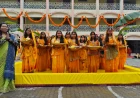
Just as the Kumbh Mela—held at the confluence of the Ganga, Yamuna, and Saraswati in Prayagraj—holds a distinct significance in Indian philosophy and social life, the Panchkoshi Mela in Buxar serves as a unique celebration of religious faith, folk culture, intellectual traditions, and social harmony. While it may not be on the same scale as the Kumbh, it is nonetheless a significant gathering that reflects the pluralistic culture of Buxar. Over the course of five days, people from diverse communities undertake a circumambulation (parikrama) of the hermitages of five different sages.

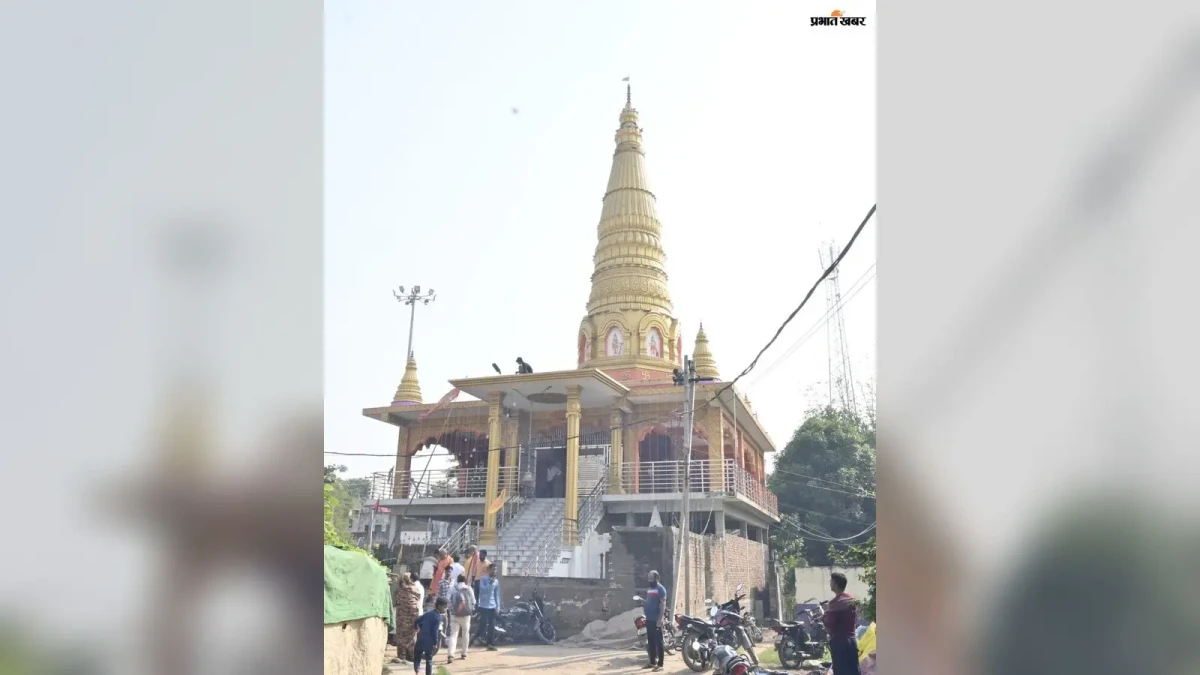
WITH HERMITAGES OF FIVE SAGES, FIVE SACRED OFFERINGS AND A FIVE DAY CIRCUMAMBULATION, THE PANCHKOSHI MELA IN BUXAR OFFERS A UNIQUE GLIMPSE
29-NOV-ENG 16
RAJIV NAYAN AGRAWAL
BUXAR------------------------Just as the Kumbh Mela—held at the confluence of the Ganga, Yamuna, and Saraswati in Prayagraj—holds a distinct significance in Indian philosophy and social life, the Panchkoshi Mela in Buxar serves as a unique celebration of religious faith, folk culture, intellectual traditions, and social harmony. While it may not be on the same scale as the Kumbh, it is nonetheless a significant gathering that reflects the pluralistic culture of Buxar. Over the course of five days, people from diverse communities undertake a circumambulation (parikrama) of the hermitages of five different sages.
Participants join the Panchkoshi Mela driven by both religious and cultural devotion. At each stop, one finds traditions such as worship (puja), the recitation of sacred narratives (katha), the singing of devotional hymns (bhajans), and communal feasts. Upon completing the five-day journey, devotees often bid farewell with the promise to return the following year—specifically to enjoy *litti-chokha*. This is more than just a traditional parting; it is a testament to a long-standing spirit of social cohesion and a shared cultural heritage that has endured for centuries.
The core objective of this pilgrimage is to enrich one’s life and strengthen the sense of harmony within society. The fair is further distinguished by discussions on profound intellectual traditions, including the *Surya Siddhanta*, astrological systems, *Phalit Samhita* (predictive texts), and *Brahmavidya* (the knowledge of the Ultimate Reality).
During the five-day Panchkoshi Mela, devotees visit the hermitages of sages located at five distinct sites. Each stop carries its own unique religious, cultural, and traditional significance. It is believed that this journey purifies the intellect, the mind, and the consciousness, while paving the way for liberation from the ego.
The first stop on the pilgrimage is the hermitage of Sage Gautama in Ahirauli. Here, the traditions associated with the *Gautama Dharmasutra* and *Gautama Samhita* are commemorated. Discussions cover topics such as the *Upanayana* (sacred thread) ceremony, the principles of *Brahmacharya* (celibacy/disciplined living), the eight traditional forms of marriage, the concept of ritual purity, and the practice of *prayashchitta* (atonement). Here, *prasad* consisting of rice, *kadhi-badi* (gram flour dumplings in yogurt curry), and *pua-pakwan* (traditional fried delicacies) is consumed. This is considered a symbol of the development of the intellect (*buddhi*).
On the second day, the devotees reach the *ashram* of Devarshi Narada in Nadaon. Here, the traditions associated with the *Narada Samhita*, *Bhakti-Sutra*, *Surya Siddhanta*, *phalit jyotish* (predictive astrology), and the practice of *kirtan* (devotional singing) are commemorated. At this stage, *sattu* (roasted gram flour) and radish are offered as *prasad*, which is associated with the purification of the mind (*man*).
On the third day, the devotees circumambulate the *ashram* of Sage Bhargava in Bhabhuar. Here, the traditions of the *Bhrigu Samhita*, predictive astrology, and agricultural culture are remembered. On this day, *chuda-dahi* (flattened rice with yogurt) is served as *prasad*, which is considered a symbol of the purification of the heart/consciousness (*chitta*).
On the fourth day, the pilgrimage reaches Nuaon, where the *ashram* of Sage Uddalaka is circumambulated. Here, the traditions of the *Uddalaka Samhita*, *Brahmavidya* (knowledge of the Supreme), social norms and prohibitions, and the commitment toward one's *guru* (teacher) are recalled. The primary *prasad* at this stage is *khichdi* (a dish of rice and lentils), which is regarded as a symbol of liberation from the ego (*ahankara*).
On the fifth and final day, the devotees arrive at the *ashram* of Maharishi Vishvamitra, located in Charitravan, Buxar. Here, the traditions concerning the *Vishvamitra Samhita*—covering the construction and restoration of temples and palaces, the study of *mudra* (symbolic gestures/signs), and rituals of atonement (*prayashchitta*)—are commemorated. With this, the five-day religious and cultural pilgrimage concludes.
The most distinctive features of the Panchkoshi Mela are its folk traditions and the spirit of collectivity. The journey across five distinct sites, the variety of *prasad* offered, and the intellectual legacies of the sages lend it a unique identity. On the final day, the devotees partake in *litti-chokha* and bid farewell, with a promise to meet again the following year. It is this tradition that elevates the fair beyond a mere religious event, transforming it into a vibrant celebration of social and cultural heritage.
What's Your Reaction?
 Like
0
 Dislike
0
 Love
0
 Funny
0
 Wow
0
 Sad
0
 Angry
0






Comments (0)