
FOOD ADULTERATION RACKET BUSTED
---In a coordinated enforcement drive spanning several Indian states, food safety authorities have busted large-scale food adulteration networks just ahead of the festive season, seizing and destroying tonnes of contaminated, fake and sub-standard food products. The crackdown, which targeted sweetmeats, dairy items and edible oils, has raised serious public health concerns at a time when demand for traditional sweets and cooking ingredients peaks across the country.

FOOD ADULTERATION RACKET BUSTED


11-NOV-ENG 1


RAJIV NAYAN AGRAWAL
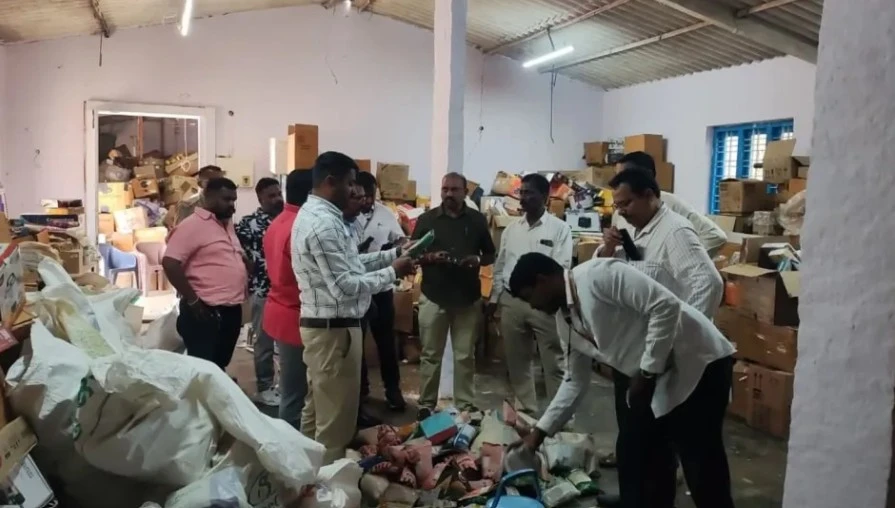
DELHI--------------------------In a coordinated enforcement drive spanning several Indian states, food safety authorities have busted large-scale food adulteration networks just ahead of the festive season, seizing and destroying tonnes of contaminated, fake and sub-standard food products. The crackdown, which targeted sweetmeats, dairy items and edible oils, has raised serious public health concerns at a time when demand for traditional sweets and cooking ingredients peaks across the country.
Officials from food safety departments in Rajasthan, Uttar Pradesh, Delhi-NCR, Maharashtra, Punjab and Himachal Pradesh conducted simultaneous raids on cold storages, manufacturing units and wholesale markets. The operations have resulted in the destruction of thousands of kilograms of adulterated products and the collection of extensive samples for laboratory testing. Authorities have made it clear that strict legal action will follow against manufacturers and traders found involved in the production and sale of unsafe food.
The festive period, particularly around Diwali and the winter wedding season, traditionally sees a sharp rise in the consumption of milk-based sweets such as rasgulla, gulab jamun, barfi and peda, along with ghee, mawa (khoya) and paneer. Unscrupulous operators exploit this surge in demand by mixing cheaper substitutes, using industrial oils, or manufacturing products in unhygienic conditions. The recent raids suggest that such practices remain widespread despite repeated warnings and previous enforcement actions.
Rajasthan emerged as one of the major focus areas of the drive. In Bhilwara, food safety officers destroyed more than 2,000 kg of contaminated food items recovered from cold storage facilities. In Tonk, teams seized 200 kg of suspected fake mawa. Balotra recorded one of the largest single seizures of edible oil, with 3,133 kg of adulterated mustard oil and 209 kg of fake ghee taken into custody. Additional recoveries of adulterated dairy products were reported from Dholpur, Srinagar and Hanumangarh.
Officials in the state indicated that several of the seized items were being stored for distribution to sweet shops and wholesalers catering to the festive market. The presence of large quantities of adulterated mustard oil is particularly worrying, as pure mustard oil is widely used in both cooking and the preparation of traditional sweets in northern and western India.
In Uttar Pradesh, enforcement teams carried out multiple raids across the National Capital Region and other districts. In Greater Noida, 360 kg of sub-standard rasgullas were seized and destroyed. Agra yielded 400 kg of fake paneer and 540 kg of mawa. In Raebareli, authorities recovered 835 kg of suspicious foodstuffs. Unhygienic sweet manufacturing units were also identified and targeted in Khurja and Bulandshahr.
The discovery of large volumes of fake paneer and mawa in a city like Agra, which has a significant tourist and local demand for dairy-based products, points to the scale of the problem. Food safety officers noted that many of these products were being prepared using non-dairy fats and starches to increase volume and reduce costs, posing direct risks to consumers, including children and the elderly who consume these items in large quantities during festivals.
In Delhi, food safety teams confiscated 221 kg of fake ghee from Karawal Nagar and made one arrest. In Nihal Vihar and the well-known Khoya Mandi at Mori Gate, more than 922 kg of unsafe rasgullas, chena and khoya were destroyed. Neighbouring Haryana also saw action, with raids exposing illegal sweet manufacturing units in Faridabad and Sonipat.
The Mori Gate Khoya Mandi has long been a major wholesale hub for milk solids used by sweet makers across Delhi and surrounding areas. The destruction of nearly a tonne of unsafe products from this market underscores how adulterated material can enter the supply chain that eventually reaches thousands of retail sweet shops.
One of the most striking recoveries came from Maharashtra. In Chhatrapati Sambhajinagar, authorities seized approximately 4,765 kg of a synthetic substance being passed off as mawa. Laboratory indications and preliminary examination suggested the product was manufactured using palm oil, vanaspati and sugar. The sheer volume of the seizure indicates that the material was intended for large-scale supply to sweet manufacturers during the high-demand period.
Synthetic mawa produced with industrial oils and vanaspati not only lacks the nutritional value of genuine milk solids but can also contain harmful levels of trans fats and other additives when prepared without proper controls. Its use in popular sweets poses a hidden health risk to consumers who believe they are eating traditional dairy-based preparations.
In Punjab, a clandestine manufacturing unit in Fatehgarh Sahib was raided. Officials recovered 286 litres of fake ghee, 600 kg of vanaspati and 420 kg of soybean oil. The presence of large stocks of vanaspati and soybean oil at a unit allegedly producing fake ghee points to systematic substitution of pure desi ghee with cheaper hydrogenated fats.
In Himachal Pradesh, teams intercepted 150 kg of adulterated paneer near Una. Though smaller in volume compared to other states, the recovery is significant for a hill state where dairy products form an important part of the local diet and where supply chains are relatively shorter.
Food safety departments across the affected states have collected extensive samples from the seized stocks for laboratory analysis. Perishable and clearly sub-standard products have been ordered to be destroyed immediately to prevent them from re-entering the market. Officials have reiterated that manufacturers and traders found guilty of food fraud will face strict legal action under the Food Safety and Standards Act.
The timing of the crackdown is critical. Festive seasons see a sharp increase in the consumption of sweets and dairy products, often purchased in bulk for gifting, family gatherings and religious offerings. Adulterated food consumed during this period can lead to a range of health issues, from immediate gastrointestinal problems to longer-term risks associated with the regular intake of industrial trans fats, artificial colours and microbial contaminants from unhygienic production.
Public health experts have repeatedly warned that food adulteration is not merely an economic offence but a direct threat to community health. Children, pregnant women and elderly people are particularly vulnerable. The use of non-food grade oils, starch and chemical preservatives in products sold as pure dairy items undermines consumer trust and places an additional burden on the healthcare system.
The multi-state nature of the recent seizures suggests that adulteration networks often operate across borders, sourcing cheap raw materials in one state and supplying finished or semi-finished products to markets in another. Cold storages, small manufacturing units in industrial areas and wholesale markets serve as key nodes in this chain. Enforcement agencies face the constant challenge of keeping pace with operators who frequently change locations, packaging and formulations to evade detection.
While the current drive has resulted in significant seizures, sustained surveillance, stronger laboratory capacity, and greater coordination between state food safety departments will be necessary to curb the problem in the long term. Consumer awareness also remains a critical component. Shoppers are being advised to purchase sweets and dairy products from known and licensed sources, check for proper packaging and labelling where available, and remain cautious about unusually cheap products during the festive rush.
Authorities have indicated that further raids and follow-up inspections will continue through the festive period. The message from food safety officials is unambiguous: those who compromise public health for profit will face consequences. For ordinary consumers, the recent busts serve as a reminder that vigilance is essential, particularly when demand is high and supply chains are stretched.
The destruction of several tonnes of adulterated food across Rajasthan, Uttar Pradesh, Delhi-NCR, Maharashtra, Punjab and Himachal Pradesh marks one of the more extensive coordinated actions in recent months. Whether it leads to a lasting reduction in food fraud will depend on consistent enforcement, timely prosecution of offenders, and greater public insistence on safe and genuine products. As families across India prepare for the festive season, the hope is that the sweets and ingredients that reach their tables are what they are claimed to be — pure, safe and fit for consumption.
What's Your Reaction?
 Like
0
 Dislike
0
 Love
0
 Funny
0
 Wow
0
 Sad
0
 Angry
0













Comments (0)