
APEX COURT QUASHED ANAND MOHAN’S EARLY RELEASE DECLARING BIHAR GOVERNMENT’S REMISSION POLICY AMENDMENT UNCONSTITUTIONAL
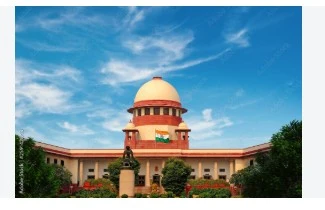
-In a significant setback to former MP and Bihar strongman Anand Mohan, the Supreme Court has set aside the Bihar government's decision to grant him premature release in the 1994 murder case of Gopalganj District Magistrate G. Krishnaiah. The court has directed Mohan to surrender within one month, holding that the Bihar government's April 2023 amendment to its prison remission policy was unconstitutional.

APEX COURT QUASHED ANAND MOHAN’S EARLY RELEASE DECLARING BIHAR GOVERNMENT’S REMISSION POLICY AMENDMENT UNCONSTITUTIONAL
28-NOV-ENG 2
RAJIV NAYAN AGRAWAL
PATNA--------------------------In a significant setback to former MP and Bihar strongman Anand Mohan, the Supreme Court has set aside the Bihar government's decision to grant him premature release in the 1994 murder case of Gopalganj District Magistrate G. Krishnaiah. The court has directed Mohan to surrender within one month, holding that the Bihar government's April 2023 amendment to its prison remission policy was unconstitutional.
A Bench comprising Justices Dipankar Datta and Sheel Nagu ruled that the amendment, which paved the way for Mohan's release after he had served around 14 years of his life sentence, was introduced without adequate justification and in violation of constitutional principles.
The verdict came on a petition filed by Uma Krishnaiah, the wife of the slain IAS officer, who had challenged the Bihar government's decision to release the former MP. The ruling marks a major development in her nearly three-decade-long legal battle for justice.
The Supreme Court observed that the Bihar government's April 2023 amendment had removed the restriction on granting remission to prisoners convicted of murdering public servants while performing their official duties. The Bench found that the change lacked a convincing rationale and appeared to have been designed to benefit particular individuals.
The court held that the amendment violated Articles 14 and 21 of the Constitution, which guarantee equality before the law and the right to life and personal liberty, respectively.
According to Manish Kumar, the lawyer representing the Bihar government, the court also took note of procedural irregularities in the decision-making process. The government had reportedly relied on an old magistrate's report while introducing the policy change, without following the proper procedure.
While setting aside the premature release, the Supreme Court clarified that its decision does not permanently prevent the Bihar government from considering a fresh remission application for Anand Mohan.
The state government may initiate a new remission process, but only after Mohan surrenders within the stipulated one-month period. Any fresh decision must be taken independently, after hearing Uma Krishnaiah, and in accordance with the applicable legal provisions.
The court also made it clear that the government cannot simply rely on its earlier decision or treat the previous remission process as valid. It must reconsider the matter through a legally sound procedure.
Reacting to the judgment, Uma Krishnaiah expressed satisfaction and described the decision as a major relief after nearly 30 years of struggle for justice.
She said the verdict would strengthen the morale of serving IAS officers and their families. She also expressed hope that no other officer's wife would ever have to endure the kind of tragedy she had experienced.
Her petition had challenged the circumstances surrounding Anand Mohan's early release, arguing that the state government's decision undermined the principles of justice and accountability.
Anand Mohan's wife, a sitting Member of Parliament, questioned the implications of the Supreme Court's decision. She reportedly argued that the benefits of the amended remission policy had extended to around six prisoners nationally and approximately 33 inmates in Bihar.
She questioned why the legal benefit of a general policy should be viewed as benefiting only one individual and said she would comment in detail after examining the complete court order.
The case dates back to December 1994, when G. Krishnaiah, a Bihar-cadre IAS officer originally from Telangana and then the District Magistrate of Gopalganj, was lynched in Muzaffarpur district.
Krishnaiah was travelling in his official Ambassador car when he encountered a funeral procession associated with the killing of a political figure. As he attempted to pass through the procession, he was attacked by an enraged mob and beaten to death. Anand Mohan, who was associated with the procession, was subsequently convicted in connection with the murder.
The brutal killing of the young IAS officer shocked the administrative establishment and raised serious questions about the safety of government officials performing their duties.
Anand Mohan was eventually sentenced to life imprisonment. However, following the Bihar government's amendment to its remission policy in April 2023, he was granted premature release after serving approximately 14 years in prison.
The Supreme Court's latest judgment has now overturned the legal basis of that release, directing him to return to prison within one month.
Following the verdict, Anand Mohan has several possible legal options. He may challenge the judgment through a review petition before the Supreme Court, seek fresh remission after surrendering and completing the required legal formalities, or pursue the constitutional remedies of pardon or commutation through the competent authority.
However, any fresh consideration of remission must comply with the Supreme Court's directions and established legal procedures.
The judgment is being viewed as an important reaffirmation that executive powers relating to sentence remission cannot be exercised arbitrarily or through policy changes designed to favour particular individuals. It also underscores the principle that equality before the law and the dignity of public servants must remain central to the administration of justice.
What's Your Reaction?
 Like
0
 Dislike
0
 Love
0
 Funny
0
 Wow
0
 Sad
0
 Angry
0










Comments (0)