
WHY DID THE LOTUS WILT IN VARANASI AND BANKIPUR: ANAND SINGH
-In Varanasi—the parliamentary constituency of the country’s Prime Minister—the BJP faced defeat in the Legislative Council elections, yet there was hardly a ripple within the party! Similarly, in the by-election for the Bankipur assembly seat—a constituency linked to the BJP’s national president—the party candidate was defeated; after some brief discussion, the matter was simply shelved! The question arises: what has become of the tradition of fixing accountability for electoral defeats within the BJP?

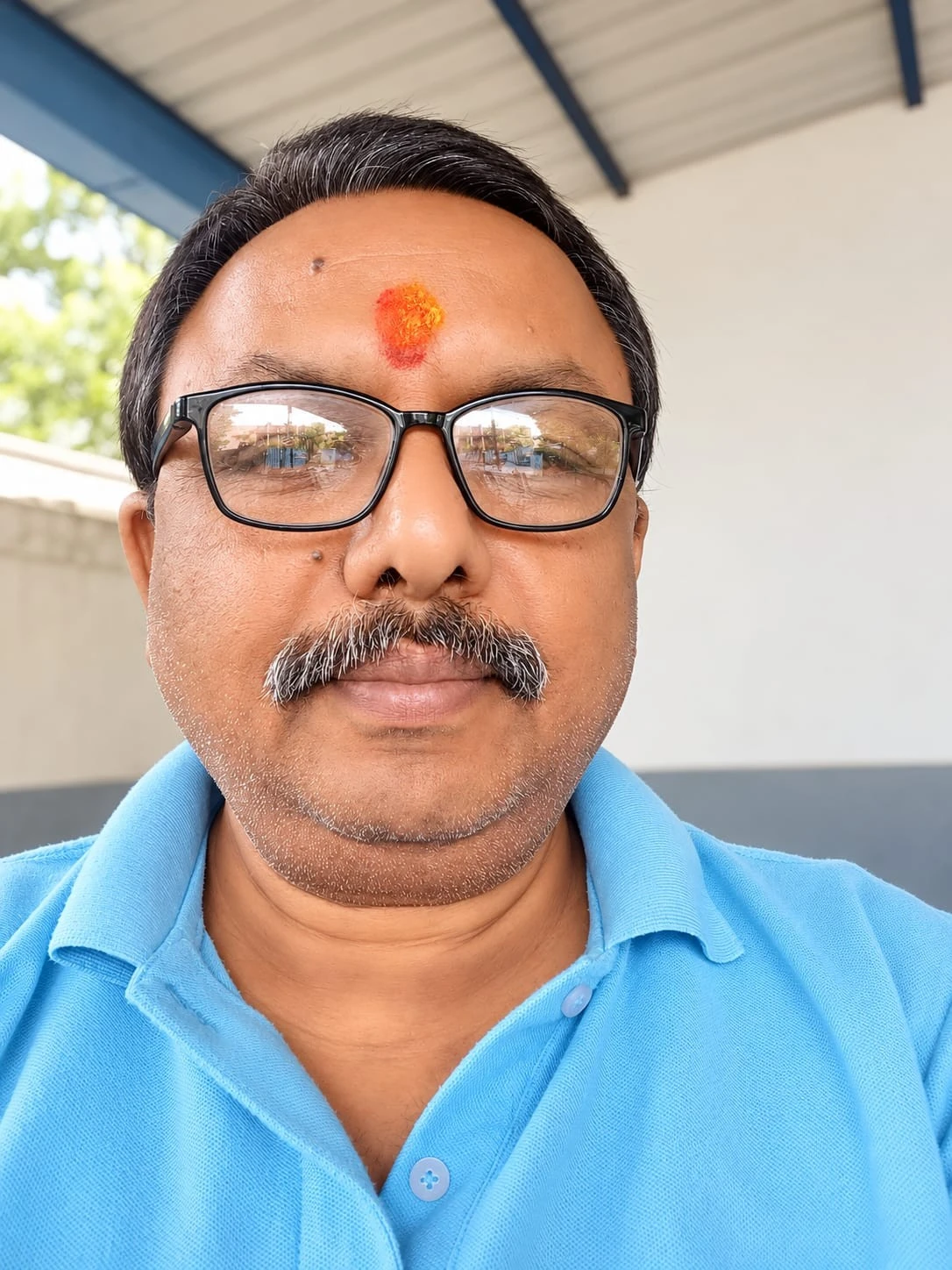
WHY DID THE LOTUS WILT IN VARANASI AND BANKIPUR: ANAND SINGH
30-OCT-ENG 21


RAJIV NAYAN AGRAWAL
ARA------------------------------In Varanasi—the parliamentary constituency of the country’s Prime Minister—the BJP faced defeat in the Legislative Council elections, yet there was hardly a ripple within the party! Similarly, in the by-election for the Bankipur assembly seat—a constituency linked to the BJP’s national president—the party candidate was defeated; after some brief discussion, the matter was simply shelved! The question arises: what has become of the tradition of fixing accountability for electoral defeats within the BJP?
Following the results of the Legislative Council elections in Uttar Pradesh, did the BJP hold anyone accountable? Was any office-bearer asked for an explanation? Was any action taken at the organizational level? What steps did the state BJP president in Bihar take regarding the defeat in Bankipur? Party workers and supporters deserve answers to these questions. Treating an electoral defeat as a mere incident and simply moving on is not a positive sign for any political organization.
A former editor of mine—a senior journalist with a deep understanding of BJP politics—made a very serious observation in a video. He noted that, rather than focusing on building and strengthening the organization, members of the BJP have become increasingly preoccupied with matters like government contracts, transfers, and postings. This observation does not merely question the working style of certain leaders; it raises grave concerns regarding the party’s organizational priorities.
He further suggests that Bhupendra-ji did not show the necessary interest in rectifying the state of the organization he inherited in Uttar Pradesh. If the weaknesses within the organization are not addressed in time, electoral setbacks will continue to serve as warnings—warnings that the party leadership will likely continue to ignore.
The situation in Varanasi is the most surprising. The BJP faced defeat in the Prime Minister’s own parliamentary constituency, allowing the Samajwadi Party—symbolized by the ‘bicycle’—to surge ahead. When, more than 48 hours after the results, there is no clear signal regarding accountability within the party, it suggests that this is no longer just a matter of a single electoral defeat. This also raises questions about the organization’s operational methods and the seriousness of its leadership.
At one time, the dedicated cadre was the greatest pillar of the BJP’s organizational strength. Workers operating at the booth level—such as *panna pramukhs* (page in-charges) and booth presidents—were considered the backbone of the party’s electoral strategy. The very system of "booth management," often credited for the party’s past successes, is now being questioned regarding its current, actual state.
Within the organization, the culture of rolling out the *dari* (floor mat), sitting among fellow workers, and engaging in hard, grassroots-level labor appears to be waning. Some of those entrusted with organizational responsibilities seem more inclined to shift these duties onto others rather than fulfilling them themselves. When positions and influence are used to serve personal interests instead of strengthening the organization, it is ultimately the party that pays the price.
This malaise is becoming a cause for concern in states like Jharkhand, Uttar Pradesh, Bihar, and Chhattisgarh. If the leaders tasked with addressing organizational weaknesses are focusing their energy on maneuvering their own political standing in Delhi—rather than grasping the realities on the ground—then who will strengthen the organization at the booth level?
In the politics of Uttar Pradesh, the Samajwadi Party is actively working to expand its social base through "social engineering." Its strategy of integrating various social groups is already beginning to manifest in electoral contests; the success it achieved in the Legislative Council elections must be viewed within this broader political context.
Given this, what are the priorities of the leaders within the ruling BJP? Are they seriously analyzing the shifting social equations? Are they aware of the changing sentiments of voters on the ground? Or are they operating under the assumption that merely holding power at the central and state levels is enough to guarantee electoral victories?
In politics, no success is permanent. Maintaining the support of the electorate requires constant engagement, organizational vitality, and the cultivation of trust at the local level. A strategy that relies solely on becoming active during election periods and winning through campaigning cannot remain effective in the long run.
The questions raised regarding the state of the BJP’s booth management during the Bankipur by-election should also be viewed from this perspective. If the very booth management system that the BJP has long touted as its greatest electoral strength appears to crumble like a house of cards during a significant election, it is no trivial matter. This could be an indication that serious flaws have developed somewhere within the organization.
The situation in Uttar Pradesh is the most concerning. The results of the Legislative Council elections are not merely a record of wins and losses; they also signal shifting political dynamics in the state and underlying weaknesses within the organization. Understanding these signals, analyzing them, and implementing corrective measures in a timely manner should be a priority for the BJP leadership.
If the party fails to learn lessons from these results, its projections for the elections due next year could prove to be inaccurate. The electoral landscape may appear straightforward to leaders sitting in Delhi, but the reality on the ground could be far more challenging.
Addressing the organization's weaknesses will require more than just meetings, speeches, and formal review sessions. It is essential to verify whether party workers are truly active at the booth level, whether 'panna pramukhs' (page-in-charge officials) are fulfilling their responsibilities, whether local office-bearers are present among the public, and how much time those holding organizational positions are actually dedicating to the party. If elections are likely to be announced in January, the BJP has about four months to set its organization in order. This is not a very long period. During this time, the party must tighten its organizational machinery, review responsibilities, and replace inactive office-bearers with individuals who are genuinely committed to the work.
Most importantly, there must be a clear mechanism for establishing accountability following an electoral defeat. Instead of questioning only the grassroots-level workers, those leaders who hold organizational responsibility must also be held answerable. If senior leaders are quick to claim credit for victories, why should they shy away from taking responsibility for defeats?
The real challenge before the BJP today is not merely to defeat the opposition, but to reconnect its organization with the grassroots. The party must realize that holding power is no substitute for a robust organization, and that political influence cannot replace hard work on the ground.
It would be a grave mistake to dismiss the defeat in Varanasi, the questions surrounding Bankipur, and the results of the Legislative Council elections in Uttar Pradesh as isolated incidents. Collectively, these outcomes raise a fundamental question: does the BJP’s organization still function on the strength of its grassroots workers, or have personal interests come to dominate a system that operates in the name of the organization?
The answer to this question will not be found in speeches, but in concrete action. If the organization’s weaknesses are addressed in time, the party still has an opportunity to improve its standing. However, if accountability is not established following these defeats—and if the voices of grassroots workers continue to go unheeded—then the upcoming elections may not prove as easy for the BJP as some of its leaders currently assume.
What's Your Reaction?
 Like
0
 Dislike
0
 Love
0
 Funny
0
 Wow
0
 Sad
0
 Angry
0




Comments (0)