
UNBRIDLED POLITICAL RHETORIC: DEVANAND SINGH
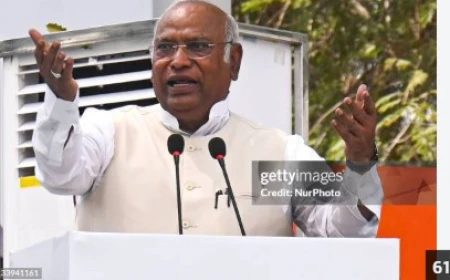
In a democracy, political decorum is not merely a dictionary definition; it is a reflection of the conduct of elected representatives—a conduct that fosters public trust. A recent statement by Congress President Mallikarjun Kharge in Patna—"Even Modi’s father will have to go"—has once again shattered this decorum. The BJP reacted sharply, labeling it an insult to Prime Minister Narendra Modi’s late father and demanding an apology. However, viewing this episode solely through the narrow lens of a Congress-versus-BJP conflict fails to address the root of the problem.

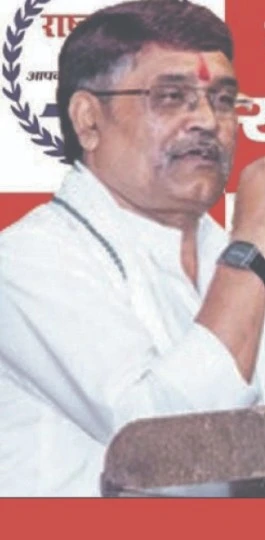
UNBRIDLED POLITICAL RHETORIC: DEVANAND SINGH
29-OCT-ENG 14


RAJIV NAYAN AGRAWAL
ARA-------------------------In a democracy, political decorum is not merely a dictionary definition; it is a reflection of the conduct of elected representatives—a conduct that fosters public trust. A recent statement by Congress President Mallikarjun Kharge in Patna—"Even Modi’s father will have to go"—has once again shattered this decorum. The BJP reacted sharply, labeling it an insult to Prime Minister Narendra Modi’s late father and demanding an apology. However, viewing this episode solely through the narrow lens of a Congress-versus-BJP conflict fails to address the root of the problem.
The core of the controversy is not merely a slip of the tongue by a senior leader; rather, it is a symptom of a growing trend where personal attacks are treated as an integral part of political strategy. When an experienced politician like Kharge—who has spent decades in public life—resorts to such language, it underscores just how low the standard of political discourse has fallen. While BJP spokespersons described it as the height of "a lack of decency/upbringing," the Congress attempted to deflect the issue by framing it as a matter of "linguistic interpretation."
This is not the first time that the boundaries of parliamentary language have been breached. Prime Minister Modi himself has frequently used terms like "shehzada" (prince), "yuvraj" (crown prince), or "Congress ki vidhwa" (Congress widow) when referring to opposition leaders. Conversely, the opposition has employed slogans ranging from "chowkidar chor hai" (the watchman is a thief) to "maut ka saudagar" (merchant of death). These instances demonstrate that the use of uncivil language is not the exclusive domain of any single party; rather, it is becoming a persistent feature of the entire political system.
According to political analysts, three primary factors drive this trend:
• Media Attention: It is far easier for a controversial remark to capture prime-time coverage and dominate social media trends than it is for substantive policy debates to do so. • Cultivating the core voter base: Harsh, aggressive language energizes the support base, making them feel like ‘warriors.’
• Diverting from core issues: Personal accusations and counter-accusations are used to shift focus away from complex, pressing issues such as unemployment, inflation, and corruption.
Have politicians lost all fear of the law? While Articles 105 and 194 of the Constitution grant parliamentary privilege for statements made within Parliament and Legislative Assemblies, this protection does not extend to statements made outside the House. Provisions under the Indian Penal Code (IPC)—such as Section 499-500 (defamation), 153A (promoting enmity), and 506 (criminal intimidation)—remain applicable.
The problem is not a lack of laws, but rather their selective enforcement. In cases involving influential politicians, the pace of police investigations, court hearings, and final verdicts often invites suspicion. While swift action is taken against ordinary citizens, cases involving those in power or prominent opposition leaders often remain pending for years. This undermines the principle of ‘equality before the law’ (Article 14).
Laws establish minimum standards, but in politics, the benchmark for ethical responsibility should be significantly higher. In the Constituent Assembly, Dr. B.R. Ambedkar remarked, “However good a Constitution may be, if those who are implementing it are bad, it will turn out to be bad.” Today, this observation is proving to be literally true; politicians are using legal provisions as a shield to justify their moral decline.
Both the ‘fourth pillar’ of democracy (the media) and the voters have a responsibility to halt this degradation. Media outlets often exploit controversial statements as ‘breaking news’ to boost their TRPs, frequently doing so without verifying facts or providing necessary context. This encourages politicians to adopt a strategy of "speak poorly, gain more visibility."
The public, too, must move beyond emotional frenzy and start asking substantive questions: When will roads be built in your constituency? Why are there no doctors in the hospitals? What is the concrete plan to provide employment to the youth? Only when voters cast their ballots based on "performance" rather than "rhetoric" will politicians be compelled to maintain decorum.
The Election Commission’s Model Code of Conduct has proven to be toothless. It needs to be given legal status, incorporating stringent provisions—such as a ban on contesting elections—for any violations. Political parties should strengthen their internal democracy and establish a code of conduct for their own leaders, with clear consequences for violations, such as the denial of an election ticket or expulsion from the party.
While the provisions of the Model Code of Conduct can be found on the Election Commission of India’s website, a lack of political will has rendered them nothing more than "paper tigers."
Ultimately, political decorum must apply equally to everyone—whether in power or in the opposition. While sharp criticism and ideological disagreement are the lifeblood of a democracy, treating personal insults, attacks on families, and hate speech as "political cleverness" is dangerous for the nation's future. The country needs a form of politics where words pave the way for solutions, rather than fueling conflict and hatred. While the fear of the law is necessary, what is even more essential is a genuine reverence for constitutional values and the moral courage among politicians.
What's Your Reaction?
 Like
0
 Dislike
0
 Love
0
 Funny
0
 Wow
0
 Sad
0
 Angry
0



Comments (0)