
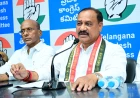
RESTUCTURING THE SECURITY COUNCIL IS ESSENTIAL FOR GLOBAL JUSTICE: MAHENDRA TIWARI
-The restructuring of the United Nations Security Council has become an indispensable requirement for establishing global justice and peace. Established in 1945 following the Second World War, the current structure of this body fails to reflect the geopolitical realities of the 21st century, casting serious doubt upon its relevance and impartiality.

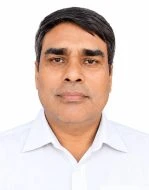
RESTUCTURING THE SECURITY COUNCIL IS ESSENTIAL FOR GLOBAL JUSTICE: MAHENDRA TIWARI
29-OCT-ENG 15


RAJIV NAYAN AGRAWAL
ARA---------------------------The restructuring of the United Nations Security Council has become an indispensable requirement for establishing global justice and peace. Established in 1945 following the Second World War, the current structure of this body fails to reflect the geopolitical realities of the 21st century, casting serious doubt upon its relevance and impartiality.
Currently, the Security Council consists of 15 members, including five permanent members—China, France, Russia, the United Kingdom, and the United States—who possess the privilege of a veto. The remaining 10 non-permanent members are elected for two-year terms. For any non-procedural resolution to pass, it requires the support of nine members, provided that no permanent member casts a negative vote. This arrangement grants even a single nation the power to obstruct international consensus.
In theory, the veto was intended to keep major powers engaged within the United Nations framework; however, in practice, it has emerged as a significant obstacle to international consensus and the ability to take swift action during humanitarian crises. During a discussion at the UN General Assembly on October 26, 2026, India’s Permanent Representative, Ambassador Harish Parvataneni, asserted that as long as the veto power exists, all permanent members of a reformed Security Council must possess equal rights.
India argues that expanding the Council while denying veto power to new permanent members would not constitute genuine reform. Such a move would create two tiers of permanent membership and perpetuate the dominance of the currently powerful nations. India has characterized this as a step that would institutionalize inequality. Notably, since the inception of the United Nations, the veto has been exercised 331 times—with the vast majority of these instances attributed to just three of the permanent members—while two other permanent members have not used the veto for over three and a half decades. India is one of the most populous nations in the world and makes significant contributions to the global economy, peace operations, and international cooperation. It has long been advocating for permanent membership. The G4 group (India, Brazil, Germany, and Japan), along with various African nations, is also calling for comprehensive reforms and equitable regional representation.
The primary institutional obstacle lies in the amendment process stipulated under Article 108 of the United Nations Charter. This requires a two-thirds majority in the General Assembly, as well as the approval of member states—including all five current permanent members. Consequently, implementing reforms without the consent of those whose existing privileges would be altered is virtually impossible. This is why, despite decades of discussion, no concrete results have been achieved.
To break this deadlock, India has emphasized the need for time-bound and substantive negotiations. Discussions alone will not yield results; member states must move forward based on written proposals, clear timelines, and defined objectives. Furthermore, it is essential to consider exercising restraint in the use of the veto, while enhancing transparency and accountability within the decision-making process.
Ultimately, the question of reforming the Security Council extends beyond the issue of India’s membership. It is tied to the future of the global order—a framework within which critical decisions regarding war and peace are made. If the United Nations is to become a true representative of the global community, it must adapt its structure to reflect changing realities. Only by striking a balance between power and equality, and between representation and effectiveness, can the United Nations become a more credible, equitable, and capable institution.
What's Your Reaction?
 Like
0
 Dislike
0
 Love
0
 Funny
0
 Wow
0
 Sad
0
 Angry
0




Comments (0)